

Gather a group of long-range precision enthusiasts and ask them about their go-to cartridges, and their answers will be as predictable as gravity. You will hear chorus lines praising the flat trajectory of the 6.5 Creedmoor, the sheer grunt of the .308 Winchester, the tactical allure of the 7mm PRC, or the wallet-draining majesty of the .338 Lapua Magnum.
You almost certainly won’t hear anyone enthusiastically shouting: “.223 Remington!”
The humble .223 Remington suffers from a severe image problem. In the lore of gun-counter expertise and internet forum gospel, the .223 is routinely dismissed as a modest, close-quarters cartridge—an intermediate round strictly limited to 300 yards and in. Beyond that imaginary threshold, traditionalists will tell you, the bullet simply loses its motivation, packs up its bags, and drops harmlessly into the turf.
They couldn’t be more wrong.
While you certainly wouldn’t choose a .223 to ethically harvest a trophy elk at 800 yards (unless your goal is to mildly annoy the local wildlife), engaging steel targets accurately at 800 yards and beyond is entirely achievable. The cartridge can deliver extraordinary precision far downrange. It simply requires a bit of mechanical sympathy, the right recipe, and a healthy appreciation for ballistics.
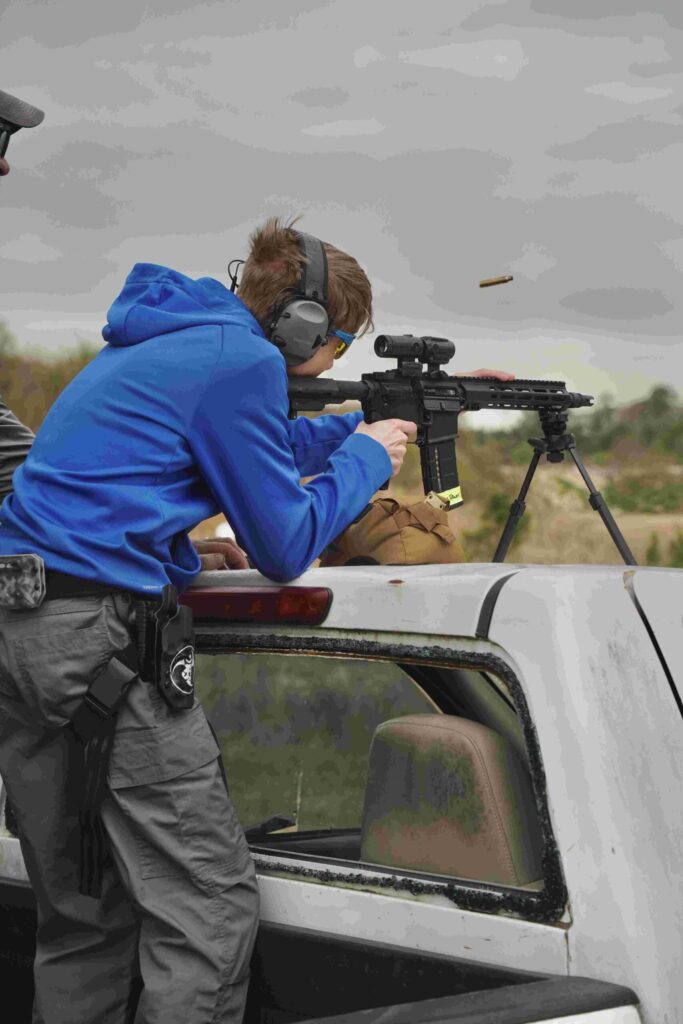
Why Drive a Small Block at Long Range?
Why bother stretching the legs of a .223 when modern hyper-velocity cartridges exist?
- Competition Constraints: Rules dictate equipment. In popular shooting sports like 3-Gun, competitive divisions limit participants to specific calibers. To stay in your class, you learn to make the .223 work at distance.
- The Ubiquity of the AR-15: Thanks to its modularity and reasonable price tag, the AR-15 chambered in .223/5.56 has become the modern American utility rifle. Almost every shooter owns one, sits on a mountain of brass, or has access to one.
- The Reloading Gateway: When handloaders start out, they naturally reload for the firearms already sitting in their safe—which almost universally means .223 Remington and 9mm Luger.
When it comes to feeding your rifle, you essentially face the reloader’s classic dilemma:
1. Buy Factory Match Ammunition: Quick and effortless—open the box and load your magazines, leaving you plenty of free time for family and other hobbies.
2. Custom Handloading: Requires hours at the reloading press, but grants you infinite rifle-tuning capabilities and a lower cost per round (though “lower cost per round” is mostly a myth handloaders use to justify buying more tools). The only real downside is becoming a basement-dwelling gremlin.
If you are new to the reloading bench, pushing a standard cartridge to its absolute theoretical limit is half the fun. If you are an experienced handloader, you already know that crafting specialized, highly consistent ammunition is an art form.
You have two choices: pay premium prices for boutique match ammunition, or invest time and effort to tailor custom rounds for your specific barrel. There’s deep, unmatched satisfaction in assembling a batch of tailored cartridges, heading to the range, and consistently ringing steel at 900 yards—especially when you show the footage to the range regular who spent his morning making elaborate excuses for why his $4,000 custom rig couldn’t group at 100 yards.
Not All .223 Rounds Are Created Equal
Let’s establish an important ground rule: cheap, surplus 55-grain “plinking” ammunition will not get you to 800 yards with any degree of predictability. Trying to hit a target at extended distances with standard bulk FMJ is less about precision and more about artillery bombardment; you aim at the clouds and hope for a benevolent gust of wind.
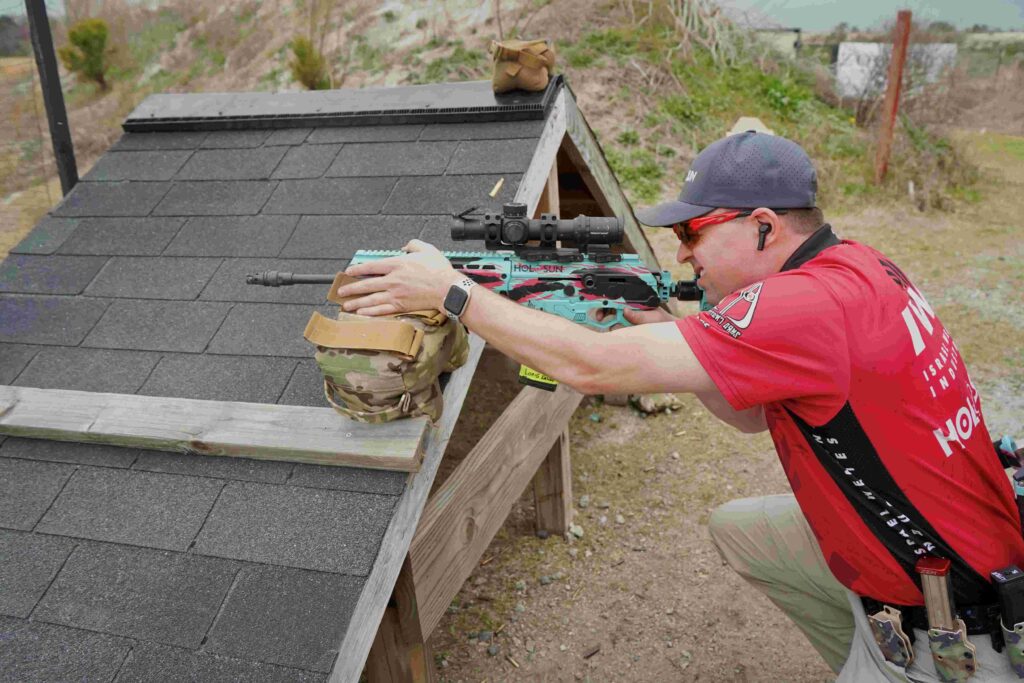
Achieving extreme range requires consistency across four key variables:
1. Projectile design and ballistic coefficient
2. Propellant burn rate and temperature stability
3. Dimensional uniformity (concentricity and seating depth)
4. Environmental awareness
To put ammunition options into perspective: bulk 55-grain FMJ range ammo is really only effective out to 300 yards due to wind sensitivity. Commercial match ammunition loaded with 69-grain to 77-grain projectiles will get you comfortably into the 300-to-800+ yard territory straight out of the box. However, custom handloads utilizing heavy 75-grain to 80-grain match bullets tuned specifically to your barrel are what will reliably bridge the gap to 1,000 yards.
If handloading isn’t currently in your schedule and you don’t want to disappear into your basement so long that your family photos end up on a milk carton, commercial match ammunition has come a long way. Factory offerings like Hornady Match or Federal Gold Medal Match deliver exceptional accuracy straight out of the box.
However, handloading allows you to tune the internal ballistics directly to your barrel’s harmonics and your optic’s Bullet Drop Compensator (BDC) reticle.
Heavyweight Champions: Why the Bullet Matters
If you plan to stretch the .223 past 300 yards, projectile selection is paramount.
Standard 55-grain projectiles feature a relatively low Ballistic Coefficient (BC). In plain English: they are light, stubby, and easily bullied by external environmental forces. A 10 mph crosswind will push a 55-grain bullet off target fast enough to make you doubt your optic, your rifle, and your life choices—resulting in an immediate miss downrange.
Conversely, a heavy projectile like a 75-grain match bullet slices through that same crosswind, retains its momentum, and delivers a satisfying impact on target.
To slice through crosswinds and maintain supersonic velocity downrange, you need weight and aerodynamic efficiency:
- 69-Grain BTHP: The entry point for serious distance work.
- 75-Grain to 77-Grain BTHP: The sweet spot for long-range .223 setups.
Through years of competitive 3-Gun shooting and countless hours behind a reloading press, the Hornady 75-grain Boat Tail Hollow Point (BTHP) has proven to be an outstanding performer. The boat-tail design reduces base drag, allowing the projectile to retain kinetic energy and maintain a stable flight path through atmospheric turbulence all the way out to 1,000 yards.
The Engine Room: Selecting the Right Powder
A great projectile without the proper propellant behind it is just expensive ballast. When selecting a powder to push .223 Remington to its outer envelope, you must evaluate three core metrics:
- Burn Rate
Gunpowders are broadly categorized as fast, medium, or slow burning. For heavy .223 projectiles (69gr to 77gr), medium-burning powders are ideal. A staple in this category is Hodgdon Varget. Medium burn rates allow pressure to build smoothly and sustain velocity down a longer barrel without spiking chamber pressures prematurely.
2. Temperature Stability
Ambient temperature affects powder burn speed. A load developed on a brisk 35°F winter morning can produce significantly higher pressures—and a completely different point of impact—on a 95°F midsummer afternoon. Modern, temperature-stable powders minimize these velocity swings, ensuring that your trajectory remains consistent regardless of the season.
3. Component Compatibility
Finding the ideal combination of powder, primer, brass, and bullet is a bit like matchmaking: some pairings click instantly, while others fail miserably. Before buying components in commercial quantities, consult reputable reloading manuals and established online load data to see what combinations have proven safe and effective for shooters using similar equipment.
Pro Tip: Resist the urge to purchase 10,000 projectiles and 48 pounds of a powder you’ve never tested. Test small development lots first—your wallet and your sanity will thank you.
Essential Equipment: Buy Once, Cry Once
Precision long-range handloading demands tools that yield repeatable, micro-inch consistency. Small variations in powder charge weight that go unnoticed at 100 yards compound exponentially as distance increases.
When selecting reloading hardware, the old adage applies: Buy once, cry once.
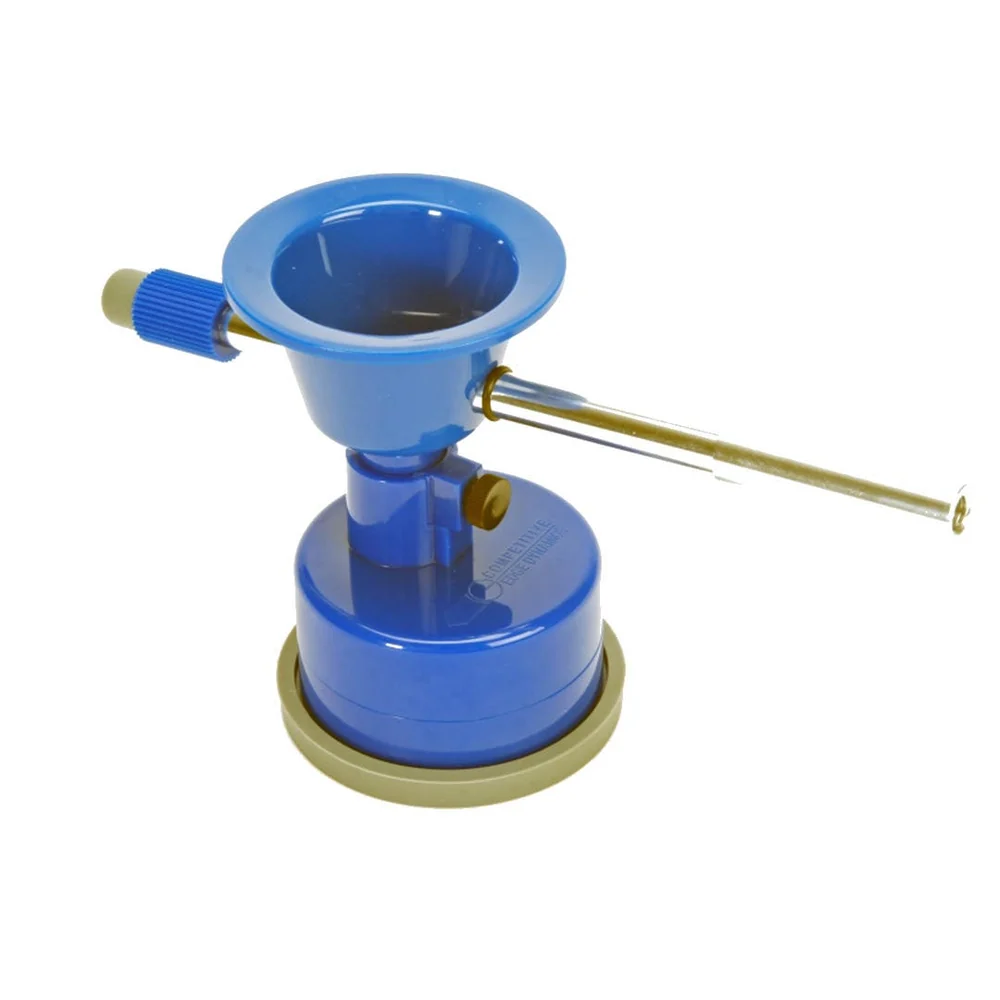
Investing in a high-accuracy, automated scale and dispenser combo like the D-Terminator Electronic Scale and the CED Trickler saves hours of manual trickling while dispensing charges down to individual kernels, eliminating velocity variations downrange.
Similarly, pairing your dies with a sturdy, low-flex single-stage press, provides rigid, flex-free die alignment that ensures uniform seating depth and minimal runout across every single round in your batch.
Final Thoughts: Ringing Steel at 800+ Yards
The .223 Remington is far more capable than popular myth suggests. With a fast-twist barrel, a heavy match projectile like a 75-grain BTHP, a temperature-stable propellant, and precision loading habits, the modest .223 transforms from a short-range carbine round into an impressive long-range contender.
The next time someone at the range informs you that your .223 is “out of its element” beyond 300 yards, don’t argue. Simply set up your targets downrange, dial your elevation, send a heavy projectile down the line, and let the distant clang of impact on steel settle the debate.
