

An Old Fascination Finally Becomes a Purchase
Every now and then, there is a firearm that catches your attention for reasons you really can’t explain. It may not be the most expensive handgun, the most attractive design, or even something that has earned a particularly good reputation. Nevertheless, something about it keeps drawing you back. For me, the Jimenez JA-9 was one of those firearms.
For years, I had somewhat of an infatuation with this inexpensive 9mm handgun. A quick search one afternoon on Guns.com showed that several of these 9mm handguns are still floating around the gun rooms and dealer cases all over the United States. So, I did what a lot of us “gun guys” do…I bought it.
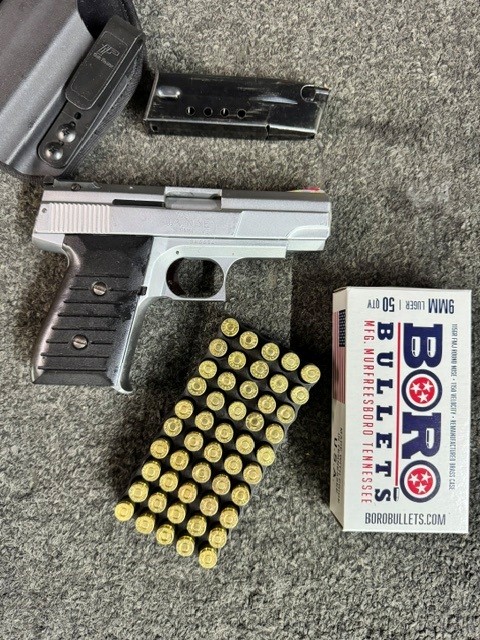
Whatever attention the pistol had received from its previous owner, a thorough cleaning apparently hadn’t been high on the priority list. Nevertheless, I was excited to finally have it in my possession. I brought the JA-9 home to my gun room, where I gave it a thorough cleaning and proper lubrication. I wanted to make certain the handgun was in the best possible condition before heading to the range. After removing the accumulated dirt and grime, the pistol began to reveal some of the character that had attracted me to it in the first place. There is something satisfying about bringing an older firearm back to a clean, presentable condition, especially one that has obviously seen better days. What had arrived as a dirty, bubble-wrapped mystery was beginning to look like a handgun worthy of a little range time.
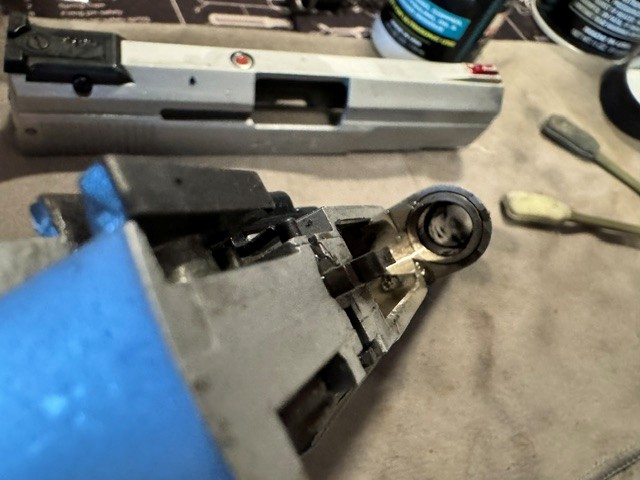
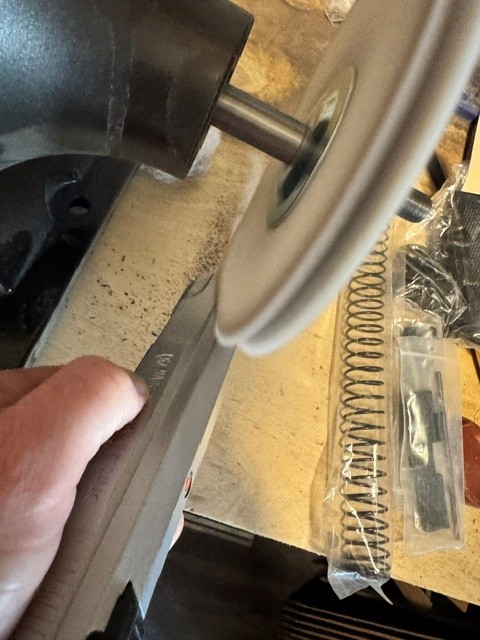
Of course, cleaning a firearm doesn’t necessarily tell you whether it will function reliably or whether its internal components are mechanically sound. With the JA-9’s history, those were particularly important considerations. But now that I finally had one in my collection, I was eager to see how it would perform. Would this inexpensive 9mm surprise me, or would it live up to the negative reputation that has followed the Jimenez name for years? It was time to find out.
An Affordable Handgun with a Complicated History
In today’s firearms market, everyone seems to be looking for the latest concealed carry handgun. Polymer frames, optics-ready slides, high-capacity magazines, and sophisticated safety systems dominate the conversation. There was a time, however, when Americans looking for affordable personal protection had considerably fewer choices. For many working-class gun owners, buying a handgun wasn’t about having the newest technology. It was about finding something they could afford.
The story of Jimenez Arms is closely connected to the American budget-handgun industry of the late twentieth century. During the 1970s, 1980s, and 1990s, several manufacturers developed inexpensive semiautomatic pistols for consumers who wanted personal protection without spending several hundred dollars. Names such as Raven, Jennings, Bryco, Lorcin, and Davis Industries became familiar in this market. These guns were often grouped under the unflattering label of “Saturday Night Specials,” but they filled a real price segment. Jimenez Arms emerged from the Jennings and Bryco lineage, eventually offering small-caliber pistols and larger centerfire models, including the JA-9 in 9mm Luger.
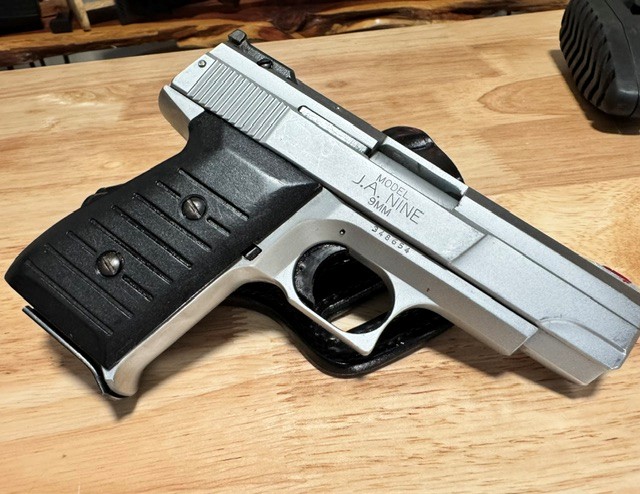
The company’s history was not without controversy. Safety concerns, product-liability issues, and business difficulties followed the brand, which ultimately ceased operations.
Today’s buyers have more choices, including relatively affordable modern pistols from established manufacturers. That doesn’t mean every older budget handgun deserves to be dismissed. Thousands were sold, and many remain in circulation. For owners who already have one, understanding its strengths and weaknesses is more useful than judging it by reputation alone.
First Impressions: A Substantial Handgun
One of the first things I noticed about the JA-9 was its weight. This certainly isn’t an ultralight concealed carry pistol. It has a substantial feel compared with today’s compact polymer-framed 9mm handguns. Its squared-off slide and full-size grip give it a distinctive, traditional appearance. Personally, I like the styling. It looks like a firearm from a different era, and that is part of its appeal.
The pistol features a manual safety and a loaded chamber indicator. Those are welcome features, but their presence should not be mistaken for proof that the gun meets modern defensive-handgun safety expectations.
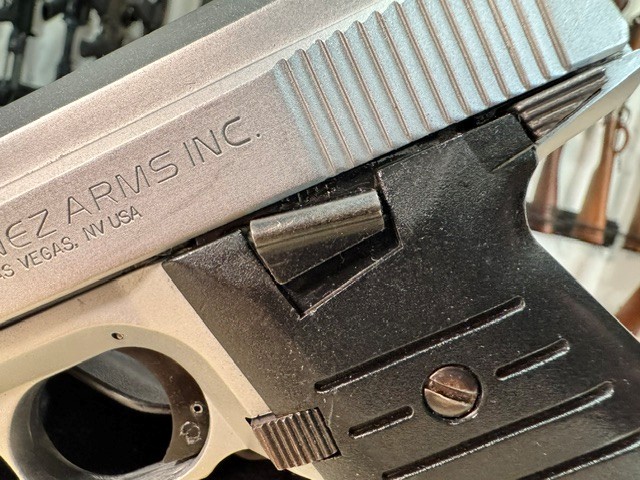
Its weight and dimensions also make concealed carry less convenient than with many current alternatives. The more immediate question for me was simple: How would it shoot?
Range Results: Better Than Expected
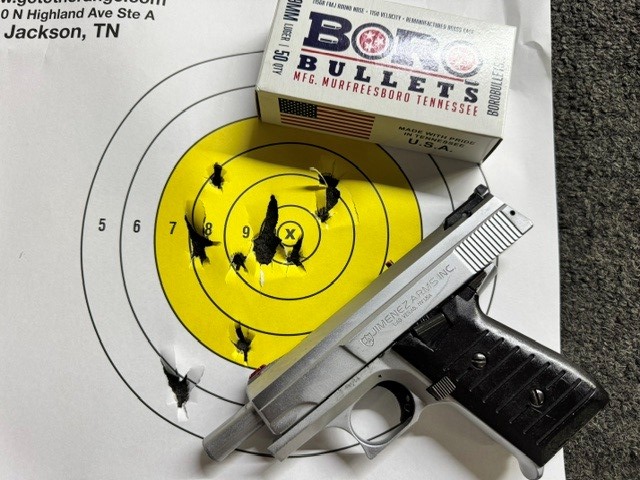
My range test consisted of 50 rounds of Boro Bullets 115 grain 9mm ammunition. That’s a small sample, but it offered a useful first look at basic reliability, accuracy, and shooting characteristics. The first positive observation was reliability: throughout the entire 50-round evaluation, my Jimenez JA-9 experienced zero malfunctions. There were no failures to feed, fire, or eject.
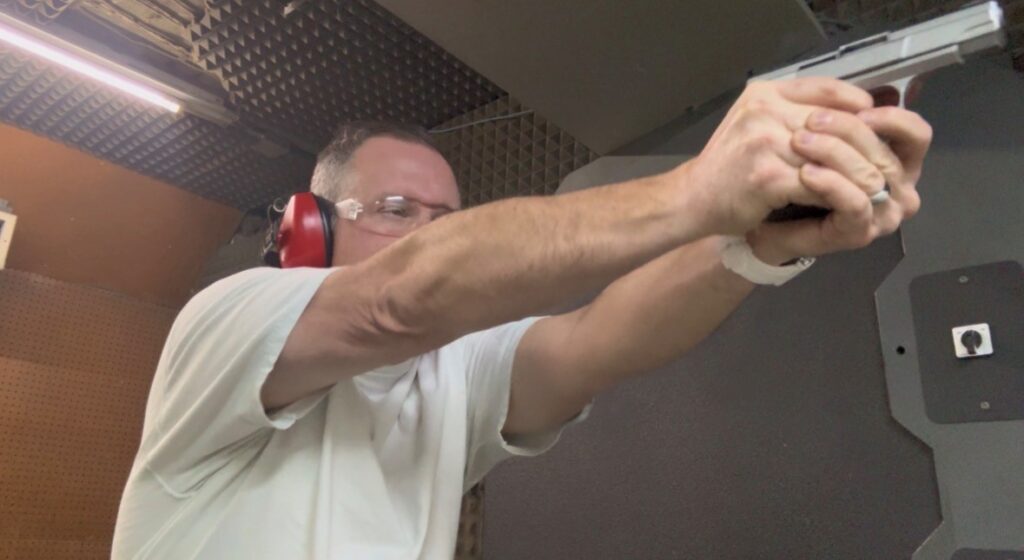
Accuracy was another pleasant surprise. I was able to place rounds effectively into the center-mass area of my target. I wasn’t trying to establish competition-level groups or prove this pistol could outperform a modern target handgun. I simply wanted to know whether I could put rounds where I intended. And, if I’m completely honest, I wanted to make sure the slide didn’t fly back and hit in the forehead. In that respect, the JA-9 performed very well.
The recoil surprised me. Given its weight, I expected a fairly mild shooting experience. Instead, the JA-9 produced a substantial amount of felt recoil. Its simple blowback operating system can contribute to a sharper recoil impulse than the locked-breech action used in many modern 9mm pistols. The recoil was manageable, but more noticeable than I anticipated. Even so, I had no trouble keeping my shots on the intended target area.
At the conclusion of the session, I was genuinely pleased. For an inexpensive firearm with a controversial reputation, the JA-9 had delivered a positive first impression.
Could the JA-9 Serve as a Concealed Carry Handgun?
This is where the discussion becomes more complicated. From a functional standpoint, my JA-9 delivered accurate shots and operated reliably during a limited test. Those are important characteristics in a defensive handgun, but reliability during one range session is only part of the equation.
When choosing an everyday carry firearm, I also consider its safety mechanisms, design, ease of concealment, and the confidence I have in carrying it. The JA-9 presents challenges here. Its owner’s manual warns against carrying the pistol with a cartridge in the chamber, even with the manual safety engaged. That is a serious limitation, not something I would overlook simply because my range test went well.
The JA-9 has a manual safety, a magazine-disconnect safety, and a loaded chamber indicator, but those features do not cancel the manufacturer’s warning.
Could this pistol potentially serve a defensive purpose?
My testing showed encouraging accuracy and function. Would I make it my primary everyday concealed carry gun? Probably not. That decision is about the older design and documented safety concerns, rather than anything negative I experienced on the range.
Holster Options and Carry Considerations
One positive characteristic is that the JA-9’s conventional shape allows it to fit a variety of universal-style holsters. That is helpful because dedicated holsters for discontinued pistols can be hard to find. However, fit alone doesn’t make a holster safe. I would favor a properly fitted rigid Kydex design, or something similar, that completely covers the trigger guard and securely retains the unloaded pistol without touching the trigger.
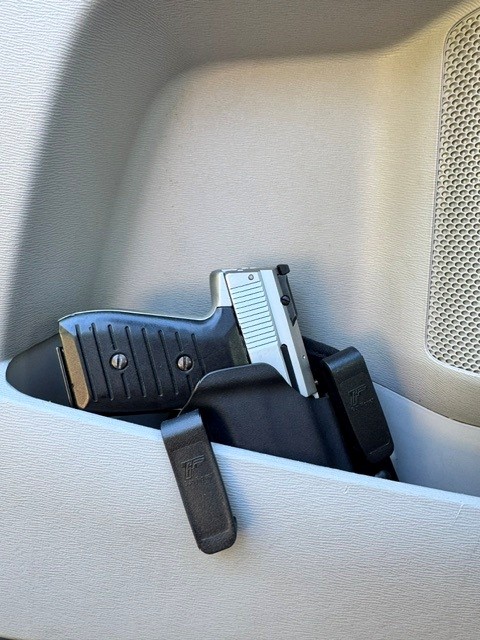
The JA-9’s weight also matters: it’s possible to conceal, but less comfortable for extended carry than many current compact 9mm pistols. Most importantly, no holster should be treated as a way around the manufacturer’s warning about chambered carry.
A Vehicle Gun, Home Defense Option, or Backup?
While I would hesitate to choose the JA-9 as my primary concealed carry handgun, I understand why an owner might consider it for other roles. Its low purchase price, substantial feel, and respectable range performance make it interesting as an inexpensive backup or a gun kept securely at home, provided it is mechanically sound and handled in accordance with the manufacturer’s instructions. I would be cautious about calling it a ready-to-use home defense handgun because the chambered-round warning is a meaningful limitation.
A vehicle gun introduces additional concerns about theft and unauthorized access; a firearm left in a vehicle should be secured in a locked firearm safe, not left loose in a glove compartment or console.
For me, the JA-9’s strongest appeal is as an affordable recreational handgun and an interesting backup option whose limitations are understood.
The Value of an Affordable Handgun
One thing I appreciate about the firearms industry is the range of products available at different price points. Not everyone has the budget for a premium pistol. Some people simply want an affordable firearm they can take to the range and enjoy. This is where the JA-9 deserves some recognition. Despite its history and inexpensive construction, the particular gun I evaluated performed admirably. It was accurate enough for my intended test, ran without a malfunction, and had styling I genuinely liked.
Fifty rounds are nowhere near enough to establish long-term reliability; I would want substantially more testing with varied ammunition before drawing broader conclusions. I would also recommend a qualified gunsmith inspect any used JA-9, particularly in light of its age and safety history.
Still, there is something satisfying about a firearm that exceeds expectations.
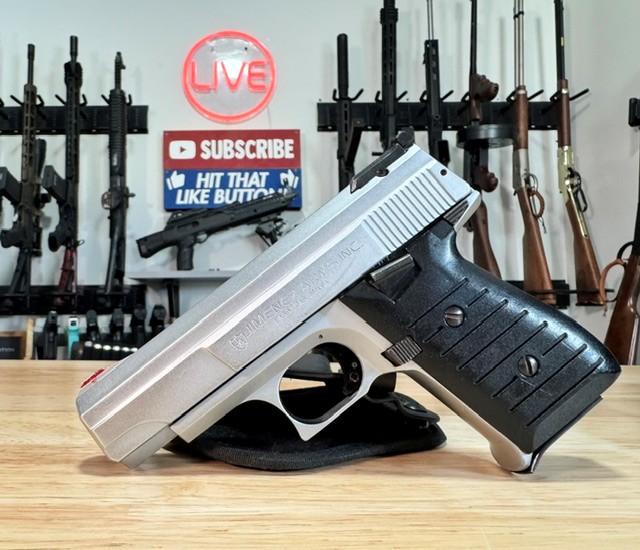
When I began this evaluation, I expected a relatively inexpensive handgun with questionable performance and perhaps a few reliability problems. Instead, I found a pistol that delivered respectable accuracy and functioned flawlessly through my 50-round session. Was the recoil heavier than expected? Absolutely. Was the gun heavier than I would prefer for everyday concealed carry? Without question. Does its history raise legitimate concerns about making it a primary defensive handgun? Certainly. But none of that changes the fact that I genuinely enjoyed shooting the Jimenez JA-9.
I liked its appearance, appreciated its substantial feel, and was impressed with how effectively I could put rounds into the center-mass area of my target. I wouldn’t put it in the same category as today’s more advanced concealed carry pistols, particularly regarding safety engineering and proven long-term dependability. But I also wouldn’t dismiss an individual example that shoots well simply because of the name stamped on its slide.
My final assessment is positive, with important qualifications. The JA-9 was enjoyable to shoot, offered satisfactory practical accuracy, and demonstrated flawless function in my limited evaluation. Its safety history keeps it from being my first choice for everyday carry, but it remains an interesting example of the affordable handguns that shaped an entire segment of the American firearms market. Sometimes an older, inexpensive firearm can surprise you. The Jimenez JA-9 certainly surprised me, and in this case, it did so for the better.
