






by Jonathan Kilburn
There are very few calibers that have a legacy like the 357-magnum. The cartridge is nearing its 90th anniversary and doesn’t show any signs of going away. Being able to reach some efficient velocities and retain excellent ballistics in a small package makes this caliber a great option for many shooters. Hunters find it useful for taking small to medium game while woodsman carries the caliber for defense against wild animals. Survivalists like it for the overall versatility without kicking as hard or beings as loud as a 44 magnum.
To date, there is only one other pistol caliber that has surpassed the 357-magnum. While it does have some benefits, it still can’t match the cult-like following of the 357.
Henry Big Boy Side Gate:
One of the showstopping rifles from Henry’s lineup is the color case hardened Big Boy carbine with a large loop and octagon barrel. Out of the box, this rifle makes hearts skip a beat. This color case hardening is matte with muted but definitive colors that flow into one another. A 16.5” octagon barrel is the beef of this rifle. It is the majority of the weight and quite a statement. On this model a large loop lever finishes off the action with a pleasing triangle curve – this is a departure from traditional large loop levers and adds some flair. To tidy up and complete the whole firearm, a walnut stock and fore-end pull the style together. The wood features impressive checkering. The stock itself is very well finished and has a small rubberized buttpad.
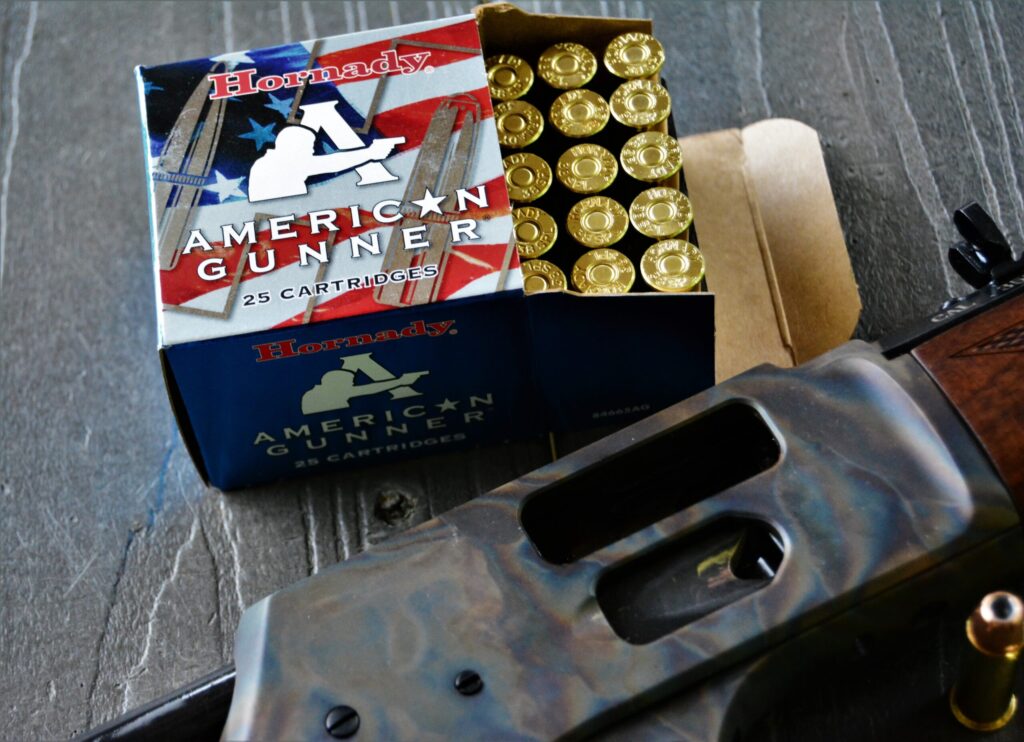
Taking hold of the rifle, the weight of this specific style is impressive. The 357 carbine is either the heaviest Big Boy model or the lightest, depending on the options. This octagon barrel carbine model comes in at 7.41 lbs while a round barrel steel rifle comes in at 6.59 lbs. In the hand, balance is adequately even to the center of the rifle but forward of the receiver, due to the material in the octagon barrel.
Overall fit and finish are excellent. New from the factory and with packing oil, the action runs smoothly with no hangups. It clicks clearly when set for firing and with the hammer down there is not much more effort to cycle this action.
Why 357?
For most purposes, 44-magnum seems like a better choice. It moves faster, it hit harder, and it weighs a little more. Where it really struggles is in small guns or those who can’t handle the recoil. A 44 magnum really beats guns to death and injures the delicate hands of office workers at the range.
357 is more than suitable for a wide range of applications. Being a smaller cartridge with less recoil than a 44, a lighter firearm can be more comfortably wielded. Ammunition also weighs less, which is important when needing to lighten the load. It also doesn’t require a transfer bar in revolvers, which means more availability in different firearms and firearm manufacturers. 357 firearms aren’t cheap, but they are usually a little less compared to 44-magnum.
When target practice or light loads are necessary, the 38 special really holds its own. While not as powerful as the 357, it can handle self-defensive and target loads easily. With the shorter cases, it’s possible to carry more ammunition with lower velocities. In a lever-action rifle or carbine with a long barrel, the 38-special reaches the same velocities as a 357 out of a short revolver. Theoretically, the 38 has enough power to hunt with, but an ethical kill cannot be assured.
Side Gate Addition to Henry:
Henry released their side gate years ago – AKA King’s Gate – in some of the most common calibers and centerfire rifles. It started with the 45/70 side gate in brass. It’s now expanded into a completely new lineup that has the potential to replace the smooth-sided classic design – which Henry has been known for. King’s gates are a welcome addition to the loading process. The removal of material in the side of the receiver may weaken the receiver a little, but not enough to become anywhere near dangerous. Because of this, the Big Boy classic series only comes with the smooth side receiver and completely omits the newly added side gate.
In the Hand:
Manipulation of the rifle was smooth and crisp. There was no binding at various spots while manipulating the lever. The internal components felt as if they had been finished and polished to the same quality as the exterior. Dry running dummy rounds were easy enough and only got caught on the insertion into the chamber while held upright instead of horizontal to the range.
Weight while loaded was relatively front-heavy, but understandable with the octagon barrel. It wasn’t overly heavy while holding to aim and the checkering on the stock and foregrip was not overly aggressive or soft. The receiver itself was a bit textured and allowed for some grip making it easy to carry by the receiver without a sling.
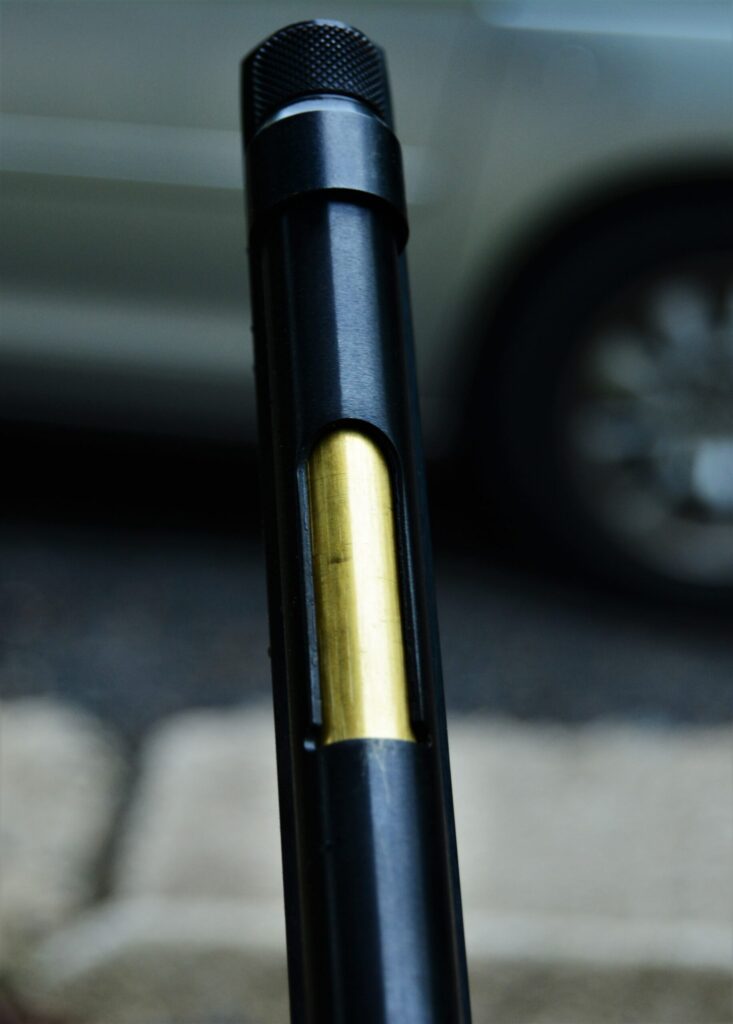
Loading with the side gate is a bit precarious. The new material is rigid and required some breaking in, as evident by the drag of the brass across the gate itself. As with any Henry rifle, the tube load is as easy as any other Henry rifle. This particular rifle will hold seven 357 or nine 38 rounds.
On the Range:
While the 357 is not a long rage caliber, it can easily hit 100 yards with proper technique and some internet hunters have even promised their 200-yard elk kills were because of the 357. I decided to test this particular rifle at 50 yards and 100 yards for more realistic distances. Paper sight-in targets were set up at appropriate distances.
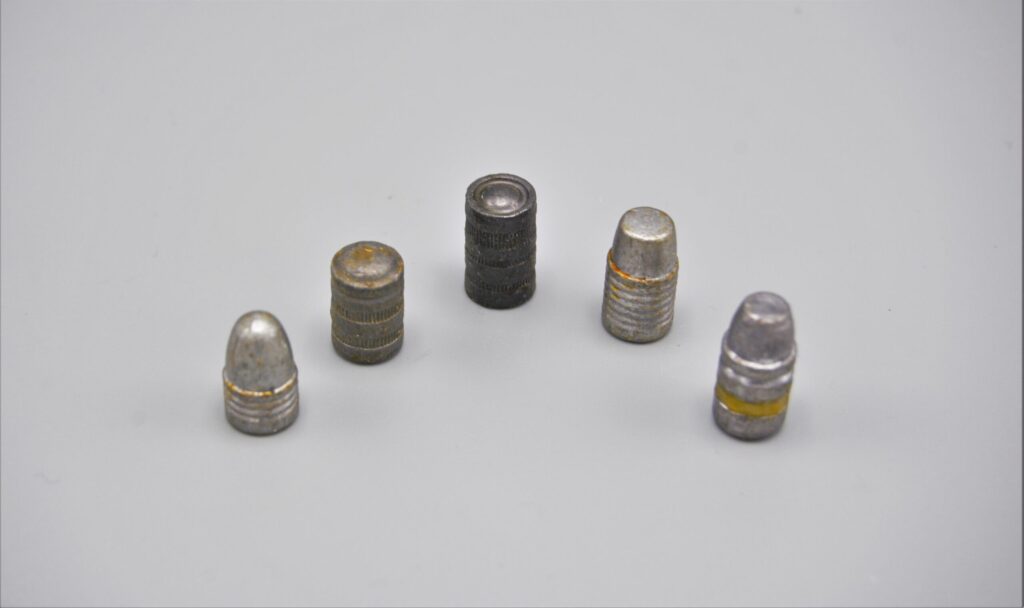
The ammo I decided to use for this test was a mix of Hornady 357 158 grain XTP, Hornady 38 125 grain XTP, and a variety of handloads with hand-cast projectiles. It should be stated that Henry does not recommend handloads. Due to the ammo shortage, it was a necessity to incorporate handloads to ensure a proper and accurate test of the rifle provided.
Loading up the 38 Special 125 grain XTP they fed into the chamber smoothly, while horizontal with the group. While the gun was muzzle up the hollow point projectiles tended to catch on the outer rim of the chamber opening. When loaded fully it seated tight and the bolt clicked into place with the lever finding its detent.
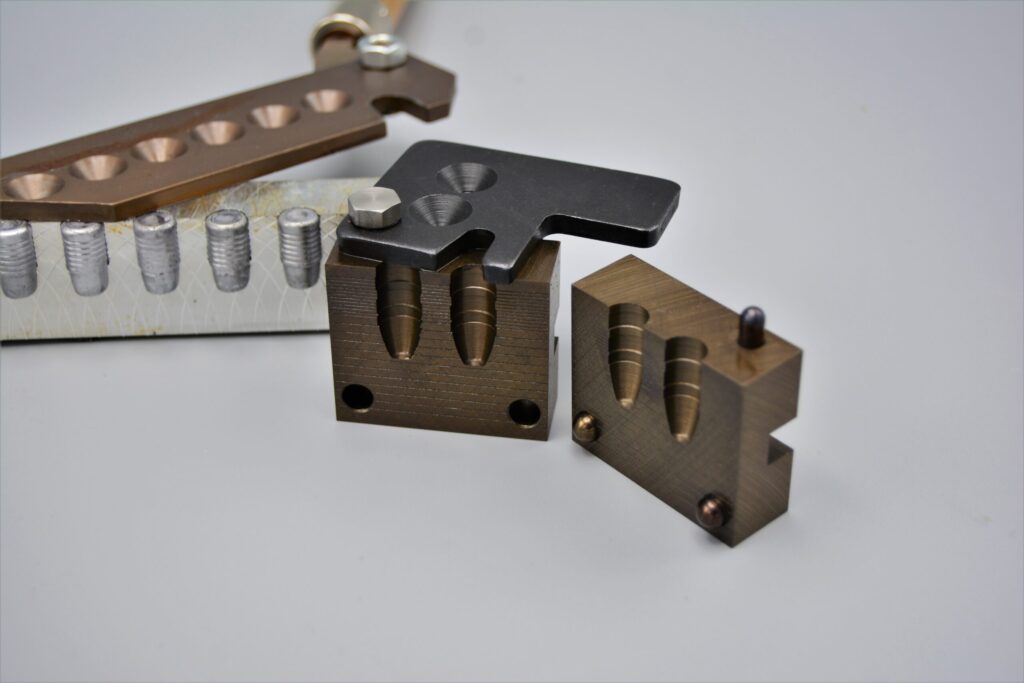
With the first shots, the firearm barely moved. All 7.4 lbs mitigated nearly all the recoil. At 50 yards the projectiles put in a 1.5-2.0-inch group and at 100 it opened up to 4.5 inches. Handloaded 38 special wadcutters, while more difficult to cycle with the action, faired a bit better at 1.25-1.50-inches at 50 yards but held 5.5 inches at 100.
Loading up the Hornady 357 158 grain XPT the lever cycled smoothly even with the muzzle up. Firing this round provided a minimal increase in recoil. At 50 yards 1-inch groups were achieved while at 100 2.0-2.5-inch groups were visible. Handloads with RCBS .357-180-SILH achieved even better results at lower than standard velocities reaching 0.75-inch groups at 50 yards and 1.75-2.25-inch at 100.
During testing, the only issue was with the user. To get a feel for the loading action, the lever was manipulated both slowly and quickly. I continually bound the wadcutters and hollow points between the receiver and barrel. This wasn’t a defect of the gun in any way but a learning curve for the best way to handle those types of rounds on this particular action.
Best in Show:
Henry is constantly making high-quality lever-action firearms. Their finish quality is far beyond nearly every competitor. The addition of an old-style octagon barrel, color case hardened receiver, and brass bead front sights give this particular rifle an antique feel. The accuracy and performance, however, are much better than any antique rifle. Being able to perform well out to 100-yard makes this the perfect hunting or survival gun without needing expensive additions.
For those that want to get more out of any Henry rifle, each one is drilled and tapped to accept other sight and scope options. All these additions and options allow any user to upgrade and customize any Henry rifle for their particular needs. One of the joys of the Lever-action is the accessories that make it more functional and easier to use.
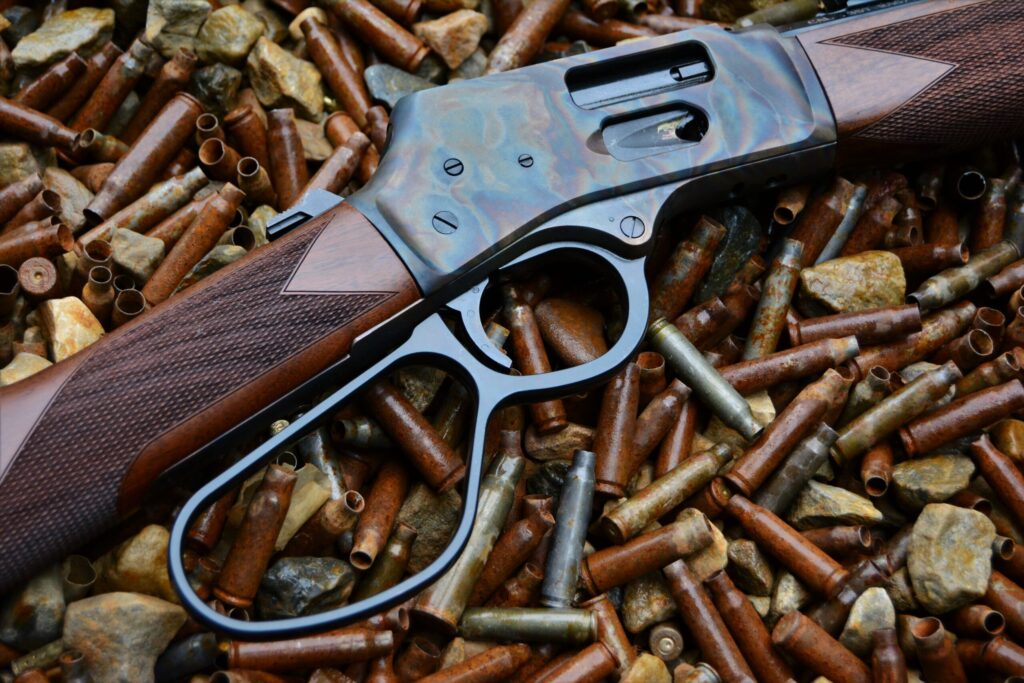
Out of the box, Henry performs flawlessly and has looks to die for. This new twist on a classic design put some elegance and class into what many consider a ‘standard’ lever-action caliber. Now that Henry also allows for two completely different ways to load the rifle the options and versatility have increased even more. Good looks, flawless function, new technology. This isn’t a cowboy gun; this is a forever gun.
