


The ammunition is as important as the gun to competitive shooters. The difference between a first-place finish and a middle-of-the-pack result can come down to the same velocity, recoil impulse, and impact point every time the trigger is pulled. Although factory match ammunition has become a lot better lately, many serious competitors eventually want complete control over every aspect of their ammunition. That’s where progressive reloading equipment like the Dillon Precision Super 1050 comes into play.
By the time a competitor reaches the upper levels of USPSA, IPSC, Steel Challenge, 3-Gun, PRS, or even local action pistol matches, one thing becomes obvious: practice wins matches. Practice requires ammunition, and lots of it.
A competitor who shoots 500 rounds a weekend could easily consume 20,000 to 30,000 rounds annually. Reloading isn’t just a matter of saving money — it’s about having the ammunition tailored to your gun, and the need to have a constant supply of ammunition that keeps you practicing.
The Dillon Super 1050 was built for exactly that purpose.
Unlike the entry-level presses that can be used for hobby reloaders, the Super 1050 is designed for shooters who want production speed and reliable accuracy. Up to 1,000 to 1,200 rounds per hour are produced in the eight-station progressive press with a powered case feeder, automatic indexing, primer pocket swager, automatic powder measure, and automatic priming system right from the factory. It also includes a caliber-specific die set, conversion kit, and roller handle.
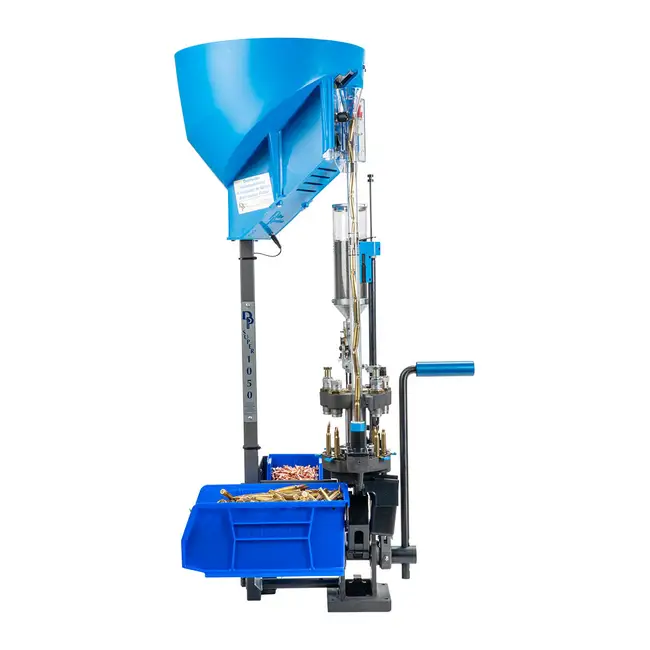
Consistency Wins Matches
Competitive shooters spend hours and hours of work on grip, trigger control, movement, and stage planning to hone grip, trigger setup, and placement. But none of those little improvements matter if every cartridge creates a different recoil impulse.
When I talk with successful competition shooters, one word comes up repeatedly:
Consistency.
In order to be consistent, ammunition is used.
A quality progressive press allows every operation to occur in the exact same sequence every cycle. Cases are resized uniformly, primers seat consistently, powder charges remain extremely repeatable, bullets seat to the same depths, and crimps remain uniform from round to round.
When your ammunition behaves exactly the same every time, you get to focus on the stage and not on wondering if a flyer came from your shooting—or your reload.
What is so great about the Super 1050?
One of my favorite features on the Super 1050 is something many reloaders don’t realize until they actually need it—the built-in primer pocket swager.
If you process military brass, removing primer crimps is another operation that requires additional equipment. Dillon incorporated this operation directly into the loading cycle, saving time and bench space while producing uniform primer pockets.
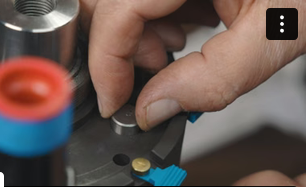
The eight-station layout also allows reloaders flexibility.
Instead of trying to squeeze every operation into fewer stations, the Super 1050 leaves room for additional safety or quality-control accessories while still allowing separate seating and crimping operations.
For the high-volume competitor, that is a major advantage.
Match Loads Built for Your Gun
Handloading is one of the biggest advantages to handloading that is to tune ammunition to your gun.
Perhaps your compensated Open gun will work best with one powder?
Perhaps your Carry Optics pistol is softer with another.
Your PCC may also be looking for a different bullet weight.
Factory ammunition is designed to work with thousands of firearms.
Your reloads only need to work perfectly in yours.
That allows competitors to experiment with:
Bullet weights
Powder selections
Overall cartridge length
Velocity
Recoil impulse
Power factor
Accuracy
So finding the right combination often results in faster follow-up shots and less fatigue for the shooter in the course of the match.
Accessories Worth Buying
And buying the Super 1050 is only the beginning. If you’re going to spend $130, the Super 1050 has many accessories to consider from day one.
One of the simplest and smartest accessories.
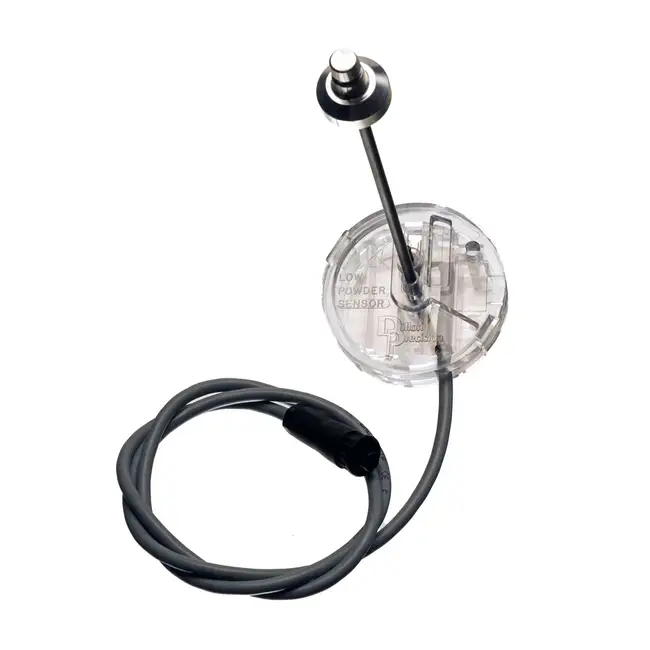
The low powder sensor provides visual and audible warnings before the powder reservoir runs empty, reducing the chance of interrupted loading sessions or accidental no-charge situations. Dillon specifically recommends it as an optional accessory for the powder station.
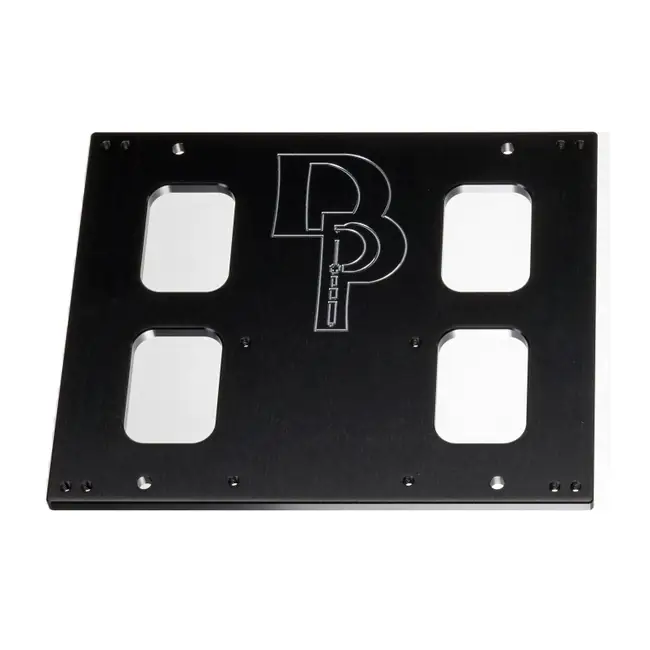
When working in the press, ergonomics matter most because you are spending hours behind the press.
A strong mount raises the machine to a more comfortable operating height while improving rigidity during operation.
Extra Toolheads
If you load multiple calibers, then spare toolheads may be one of the best investments you can make.
Rather than spending a few minutes to readjust every caliber change, each toolhead can be set up for life and changeover time is much quicker.
Additional Caliber Conversion Kits
Most competitive shooters will eventually come into contact with multiple firearms.
Having dedicated conversion kits allows you to switch between calibers quickly while maintaining repeatable setups.
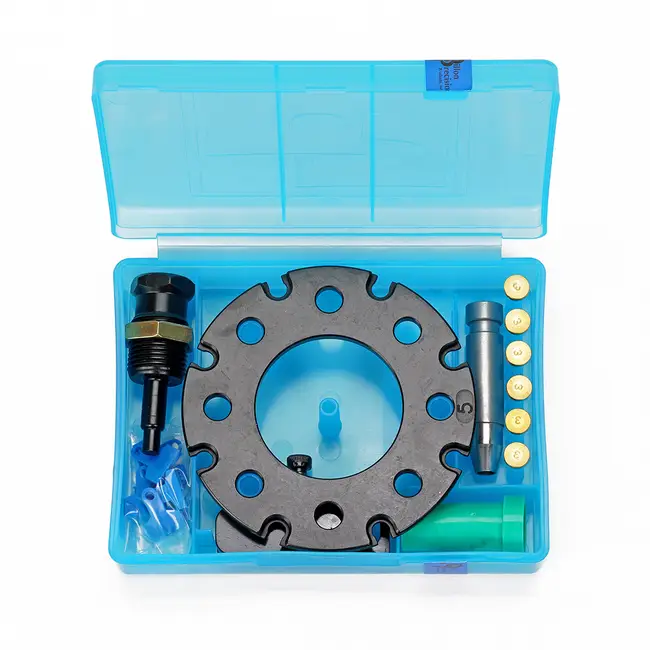
Loading primers is much more efficient if several tubes are already filled before a loading session begins.
It seems like a small purchase, but it keeps the press running instead of stopping every few hundred rounds.
Keeping bullets within easy reach speeds up the production of bullets and reduces the amount of unnecessary movement during long loading sessions.
Sometimes the smallest ergonomic improvements make the biggest difference after several thousand rounds.
Competition ammunition should never be judged based on appearance alone.
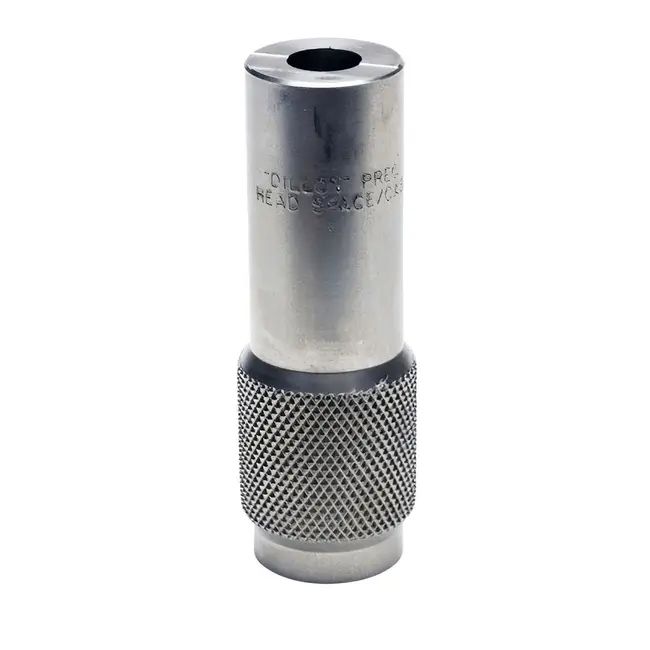
From a reloader’s perspective, every serious reloader should have good case gauges for each caliber they load.
Pre-match ammunition checks before match day can help in avoiding frustrating chambering problems that cost precious seconds—and worse, a stage.
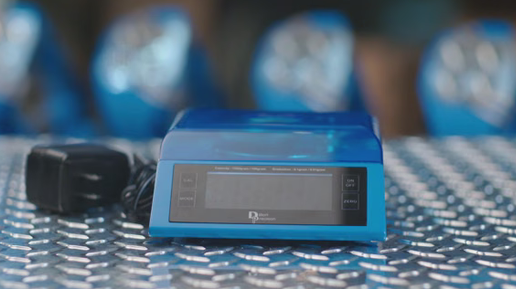
While Dillon’s powder measure is very consistent, verifying charges with a reliable electronic scale is one of the most important safety practices in reloading.
Trust your equipment.
Verify your equipment.
Brass Preparation Equipment
Even though the Super 1050 has a primer pocket swager, quality brass preparation is still needed.
Case cleaning, trimming rifle brass when necessary, checking for defects, and sorting brass by headstamp all contribute to producing match-grade ammunition.
Garbage brass seldom produces championship ammunition.
Is it worth the investment?
The Super 1050 is not meant for someone who is loading two boxes of hunting ammunition every fall.
It is designed for serious shooters.
If you’re shooting several thousand rounds per year, competing regularly, or loading for multiple firearms, then the machine begins to justify its price easily through increased productivity and outstanding consistency.
More importantly, it gives competitors something difficult to place a dollar value on:
Confidence.
Confidence that every round will chamber.
Confidence that every powder charge is repeatable.
Confidence that all magazines are filled with ammunition made for your firearm.
Competitive shooting is a game that is measured in fractions of a second. Shooters spend thousands of dollars on better optics, lighter triggers, better compensators, and custom barrels. Yet one of the biggest performance boosts often begins at the loading bench.
The Dillon Precision Super 1050 is a serious investment, but it’s equally serious equipment. Its high production rate, integrated primer pocket swager, eight-station design, and factory case feeder make it one of the best progressive loading systems for competitors who refuse to compromise. Whether you are building soft-shooting USPSA loads, precision PCC ammunition, or reliable match ammunition for weekend steel matches, the Super 1050 gives you the ability to produce ammunition that matches your skill level.
Because in competition, consistency doesn’t happen by accident—it starts one round at a time.
