



MidWest Industries Alpha: Modernizing the Nyet
By Jonathan Kilburn
AKs are a bit of a passion project for me. I like them, but I also hate them. They’re more accurate than Fuddlore would have you believe and reliable to a fault when designed and built properly. At the same time, they are antiquated when it comes to modularity and customization. With the price of surplus Russian ammo continuing to rise, the prices of AKs have been dropping. Not by much, but they’re still dropping.
While the AR platform remains the leader in North America for modularity, caliber options, and ease of finding parts, an AK has a certain… je ne sais quoi. Maybe it’s the weight and mechanical roughness we have all learned to embrace. Maybe it’s the lore of the Wolverines drifting through the action. Whatever it is, I’m there for it.
Modernization
A lot of manufacturers have attempted to make the AK more adaptable to changing circumstances. Triangle stocks, dongs, optic mounts, rails, chassis systems, and everything in between have come and gone. None have truly captivated a large enough portion of the market to completely redefine what a modern AK should look like. Mix in the Yugo versus Russian versus American-made arguments, and you end up with a wide spectrum of opinions, compatibility issues, and capabilities.
American companies have also attempted to manufacture the AK stateside with results that have been, well, less than perfect. While there are a few standout manufacturers and accessory companies, so many others have gained notoriety for producing hand grenades disguised as rifles. No company is completely immune from growing pains. There is a lengthy R&D process involved with getting an AK right, and far too often some of that R&D has been pushed onto the consumer instead of being handled by the manufacturer. That still happens, but not nearly as often as it did even a decade ago. American AK manufacturing has come a long way and so have the attempts to modernize the platform.
Midwest Industries
That’s where Midwest Industries comes in. They’re not just making accessories; they’re firearm modernizers. From lever guns to firearms that look like they belong in the hands of a space cadet, Midwest builds parts that can make you rethink the potential of the old gun sitting in the back of the closet. I’m not saying Midwest does everything perfectly. Some products can be difficult to install or require a little consumer R&D of their own to get just right. What I do appreciate is that they listen to consumers and actually use the products they produce.
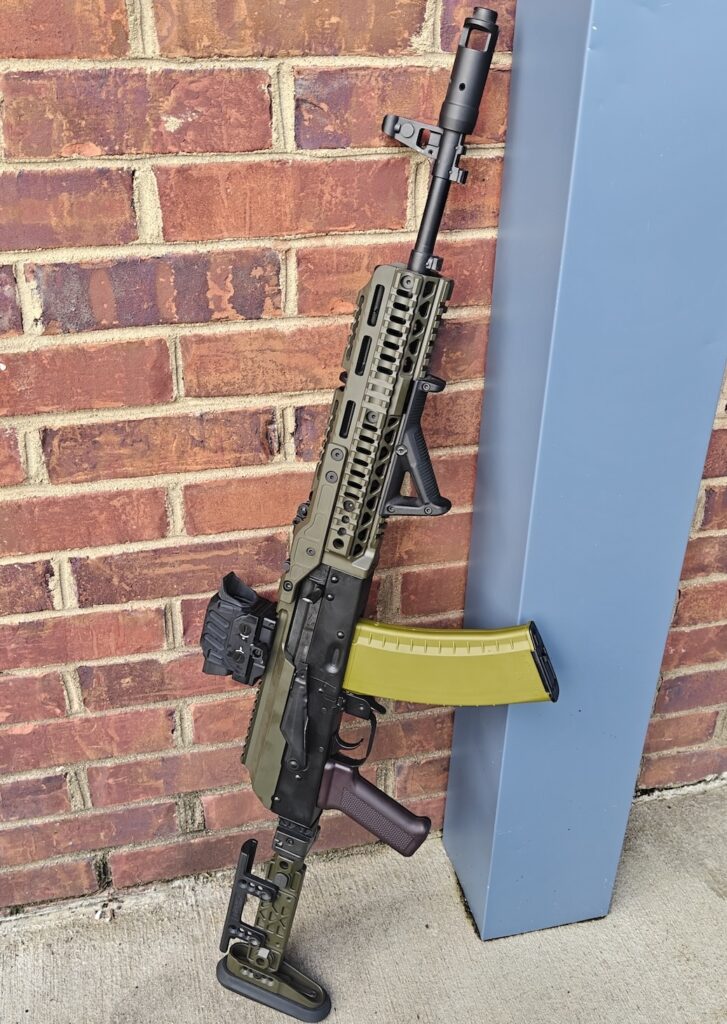
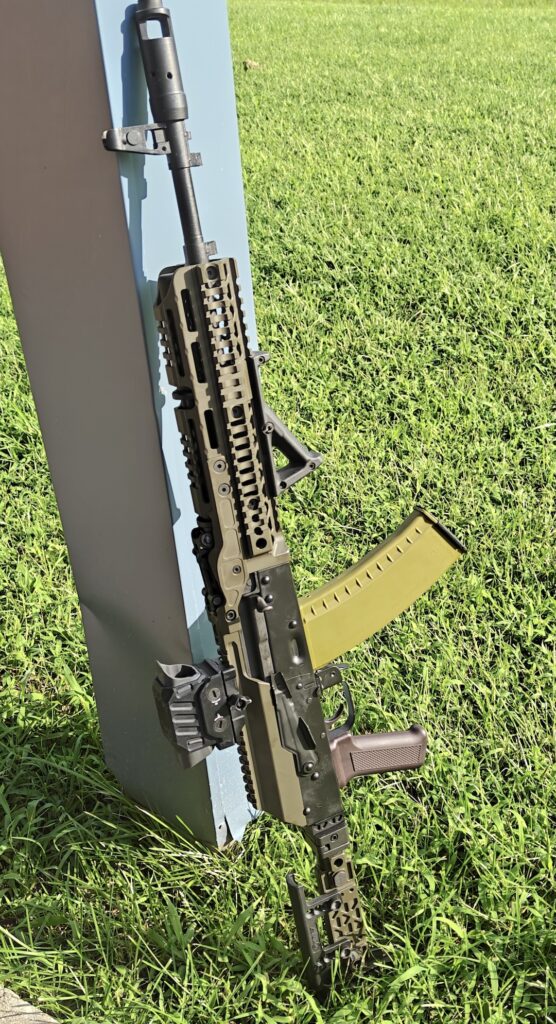
A few years ago, Midwest introduced the Alpha Series for the AK. This isn’t the first time I’ve written about it, and it probably won’t be the last. The Alpha was designed as an all-in-one modular adaptation for the AK platform, but thankfully, you do not need to buy the entire system to use it. The individual pieces can be purchased and used independently depending on what you actually want from the rifle.
The Alpha Series includes handguards, optic-mounting solutions, dust covers, stocks, and adapters. If there is something you have wanted to modernize on an AK, there is a pretty good chance the Alpha Series has an answer for it.
It’s Not Just for Looks
From a “squint, it’s mint” perspective, the Alpha Series is hard to beat. It looks the part of a rifle that can adapt to different situations and environments. Up close, though, the system does more than just dress up an old platform. It addresses many of the problems that have plagued attempts to modernize the AK without compromising the basic functionality that made the rifle successful in the first place.
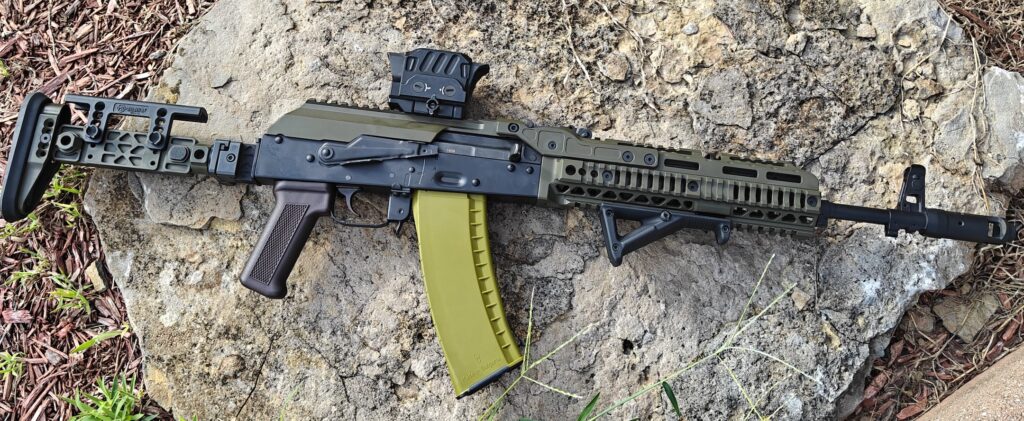
On a full Alpha setup, the rifle retains the use of its iron sights while gaining modern Picatinny mounting options. At the rear sight block, Midwest created a mounting system that ties the front handguard and dust cover into a more rigid assembly. That helps solve one of the biggest problems with many railed dust covers and gas-tube optic mounts: movement.
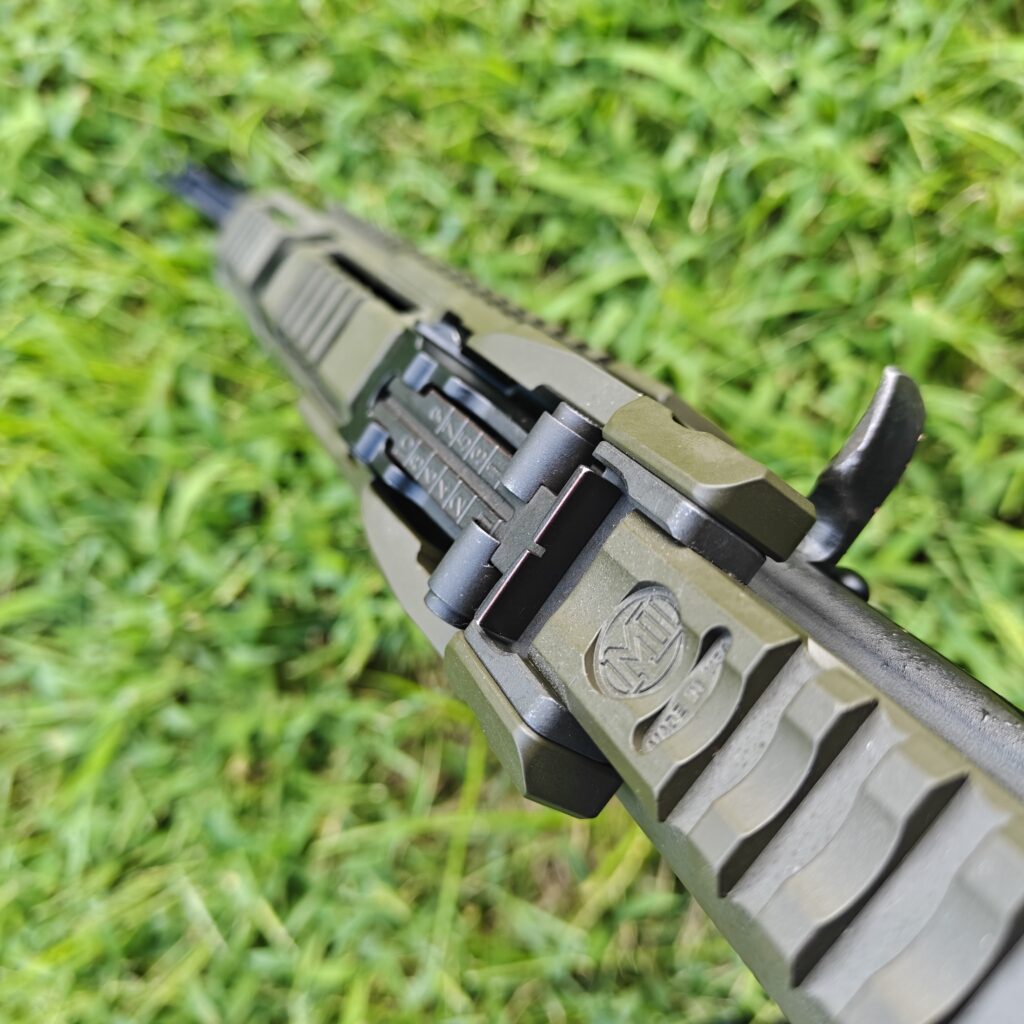
Movement has always been an issue when trying to add modern optics to AK and SKS-type platforms. If the mounting surface shifts every time the rifle is fired, cleaned, or taken apart, it becomes pretty difficult to trust your zero. A rail is only useful if the optic mounted to it is still pointing at the same place when you need it.
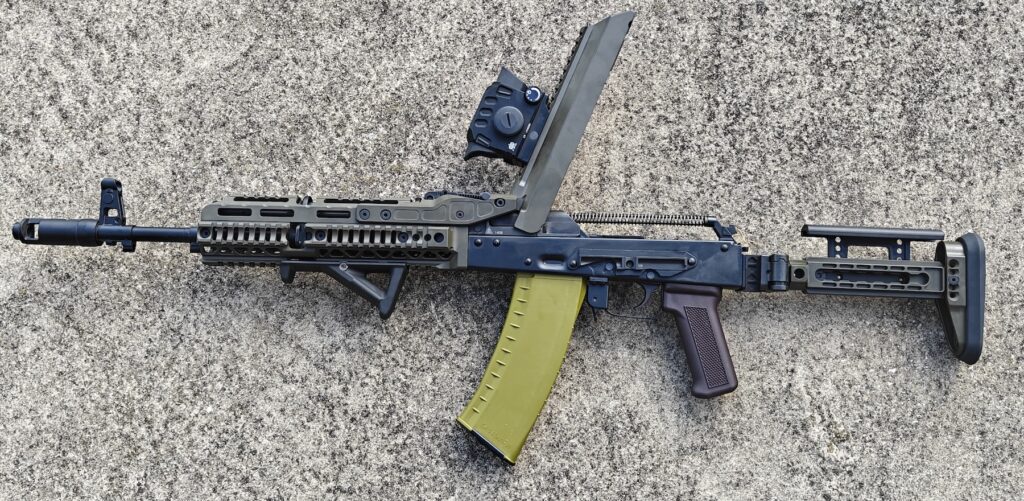
The Alpha dust cover is a practical piece on its own. It is hinged at the mounting point, meaning the top cover is now integrated into the rifle instead of being a separate part waiting for an opportunity to disappear into the grass. The recoil spring assembly helps hold everything firmly in place, while the top provides Picatinny mounting space for an optic. Midwest also machines the center section in a way that maintains an unobstructed view of the factory rear sight. If the optic breaks, dies, falls off, or otherwise decides it no longer wants to participate; the irons are still there.
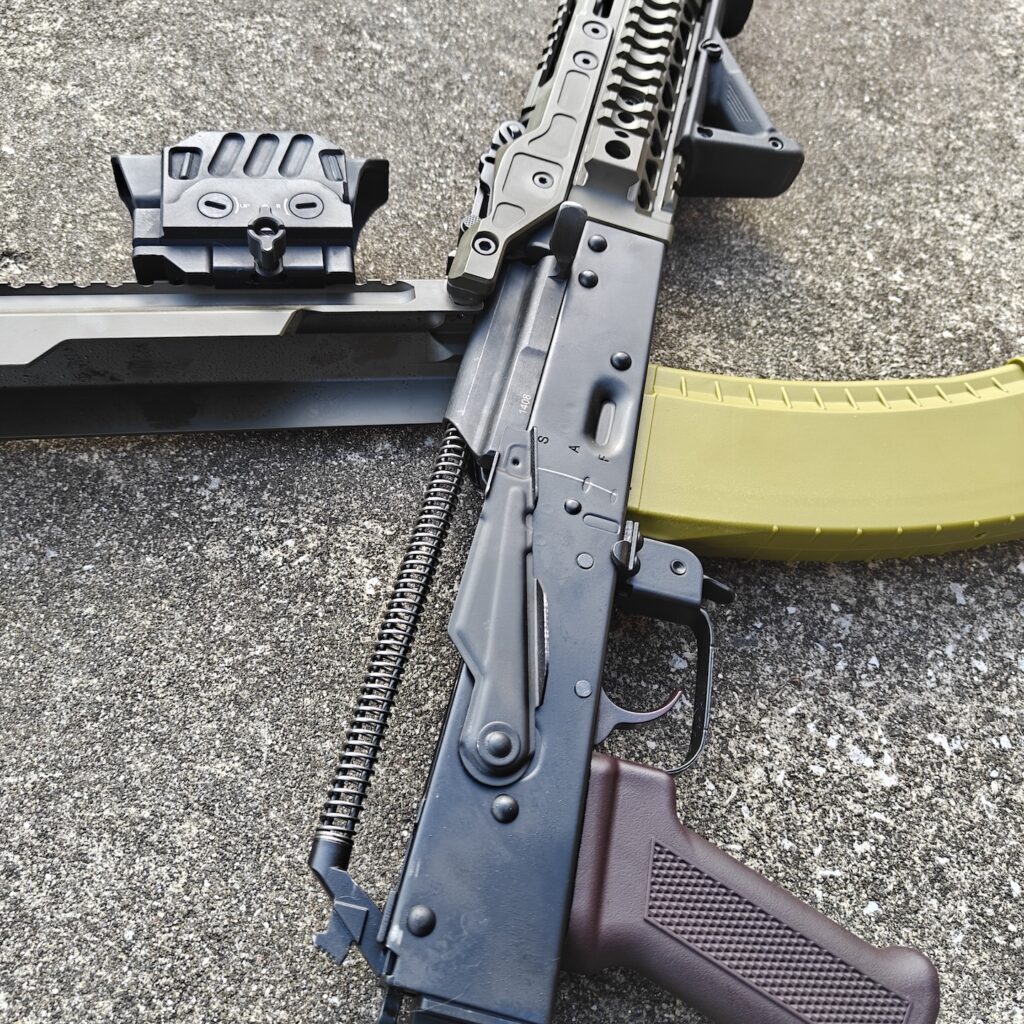
The handguard is a two-piece system consisting of an upper section around the gas tube and a lower handguard with additional mounting space and QD points. M-LOK and rail sections give the user options for lights, grips, slings, and whatever else they decide absolutely needs to be hanging from the rifle. The system also accounts for sling loops and different gas-block and front-sight arrangements. One of the biggest benefits is that many standard AK-pattern rifles can use the system without permanently modifying the firearm itself.
Mix the Picatinny rear adapter with Midwest’s folding stock and suddenly even an old AK can accept a much more modern and customizable stock arrangement. The folding stock offers an adjustable cheek riser and locking beam, allowing the rifle to be adapted to the shooter rather than forcing the shooter to adapt to whatever piece of wood or polymer happened to leave the factory with the rifle.
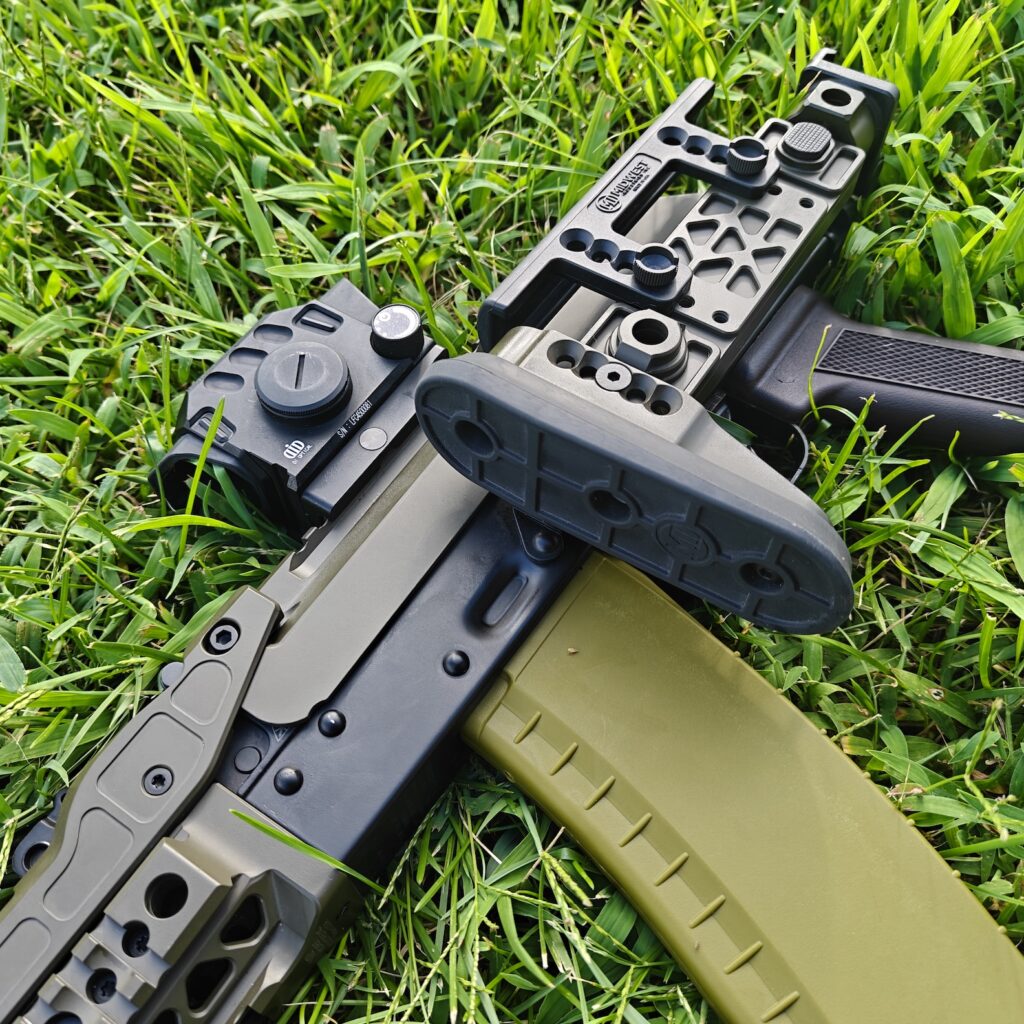
No matter how weird someone’s shoulders and cheeks are, there is probably an adjustment for them.
The folding mechanism is easy enough to use, although it can take some work when new. The lift-and-fold locking system can be stubborn, particularly before everything has worn in. Under stress, I would rather have a system that requires less thought and less manipulation, but I also understand why Midwest wanted the stock to lock firmly when deployed.
There Are a Few Drawbacks
The biggest drawback is weight. A full Alpha system adds quite a bit of it, and much of that weight ends up toward the front of the rifle. AKs are not exactly known for being lightweight to begin with, especially when compared with a similarly equipped AR. It’s no M1 Garand or SVD, but once you start stacking rails, optics, lights, and accessories onto the front of the rifle, you begin to notice it.
This was also one of my biggest complaints with other modular rifles and AK-inspired designs, including the M10X. Put enough mass far enough forward, and the rifle becomes more tiring to hold on target for extended periods. Offhand shooting becomes more taxing, and maintaining repeatable stability without some kind of brace point requires more effort. You can train around weight, but training does not make the rifle lighter.
Installation can also be a challenge. It took me a few hours to get the entire system installed properly and required some minor fitting and adjustments to get everything exactly where I wanted it. That is not completely Midwest’s fault. The AK is not a true mil-spec platform in the way most Americans think about the AR. There can be a surprising amount of variance between rifles, countries of origin, manufacturers, and individual production runs.
The most difficult part for me was not the rear stock adapter. It was getting the mounting system adjusted correctly, so the dust cover and handguard lined up and functioned the way they should. What looks like a handful of screws can quickly turn into a fight between maintaining a nice finish and reminding a stubborn piece of metal who is actually in charge.
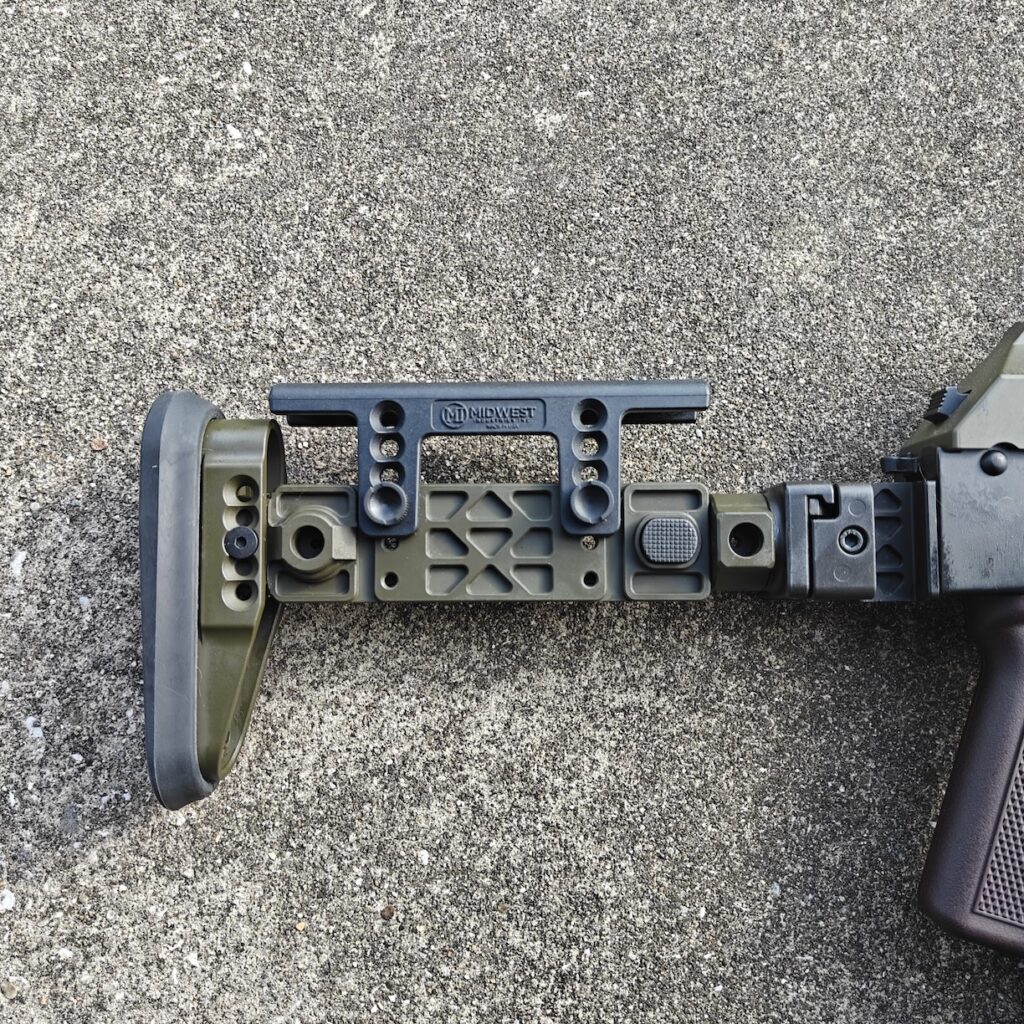
There also is not universal compatibility across every AK variant. Yugo-pattern rifles, such as many of the Zastava guns, use different dimensions and furniture arrangements from more traditional AKM-pattern rifles. I would love to see broader support for those rifles, but I also understand that doing so would require redesigning major portions of the system for a relatively specific group of firearms.
For this project, I wanted to use a rifle that would not make me cry if I had to modify, fit, or accidentally scratch something. I chose my PSAK-74. If something needed to be replaced, the PSA was a much easier rifle to experiment with than one of my Saigas.
Some rifles deserve experimentation.
Some deserve to be left alone.
Functional Check
Overall, adapting the Alpha Series to the PSAK-74 ended up being a good choice. The additional weight helped tame what was already minimal recoil, and the hinged dust cover made checking the action in the field much easier. I could open the rifle without completely removing the top cover, disturbing the optic setup, or setting parts on the ground where they could immediately vanish into another dimension.
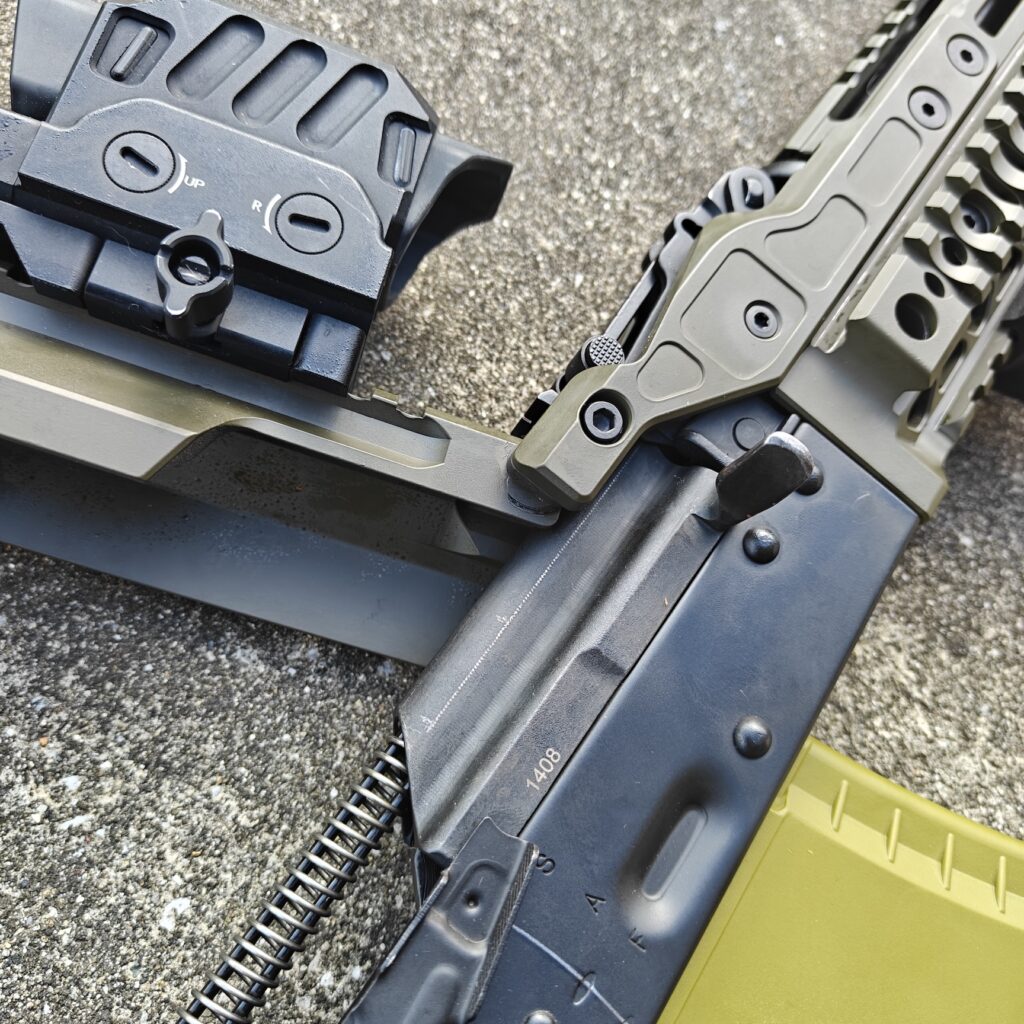
The folding stock was another major benefit. With the stock folded, the rifle became a much more compact package for storage or transport without giving up the ability to quickly return it to a full-length shooting configuration. Depending on how the rifle is set up, optics and accessories can also be positioned farther forward on the handguard or gas-tube area, leaving plenty of flexibility in how the rifle is configured.
What sold me most on the Alpha system, though, was that the AK still works like an AK.
The charging handle remains unobstructed. Whether I come over or under the rifle to work the action, I can still reach it without pinching my hand or fighting around accessories. The safety remains where it has always been and operates normally. The factory iron sights are still usable and remain available if the optic fails.
I did have to remove the old East German night sights, but everything else retained its original purpose. For a modernization system, that is important. There is no point in adding rails, optics, and accessories if doing so makes the basic rifle harder to operate.
Is It Worth It?
Yes, and no.
If keeping weight to an absolute minimum is your primary goal, the Alpha Series probably is not going to make you happy. A full setup adds noticeable weight, and much of it ends up in places that make the rifle feel heavier than the number on a scale might suggest. Shooting for extended periods without a supported position can become taxing. The extended handguard does provide more options for resting or bracing the rifle without putting pressure directly on the barrel, but there is no getting around the fact that you are adding metal to an already substantial gun.
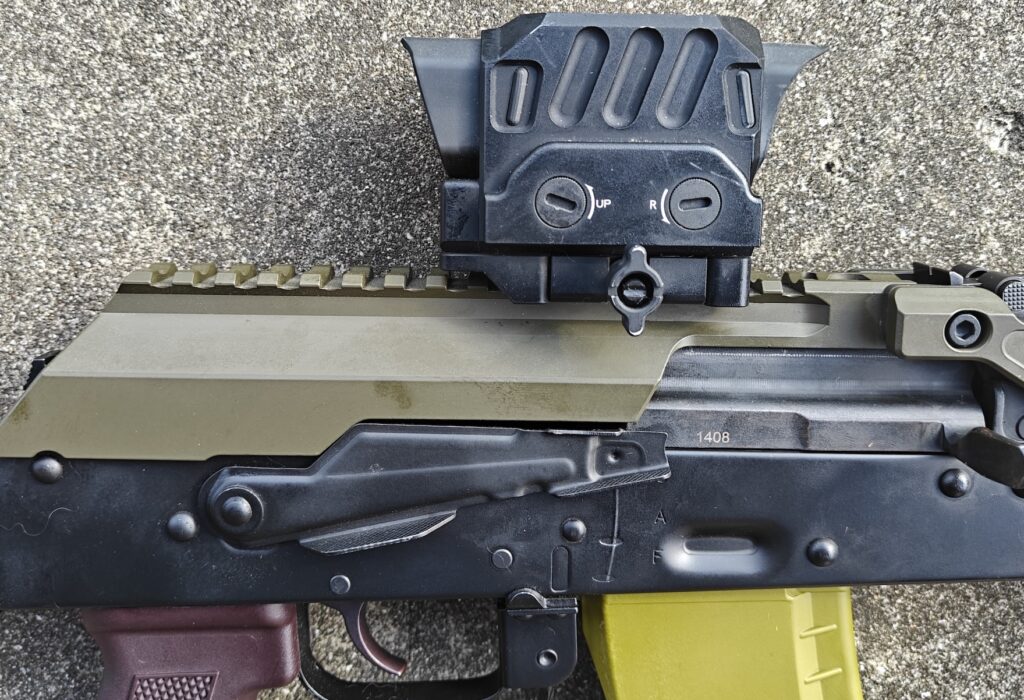
If modularity is the priority, the answer changes considerably. The ability to easily mount optics, lights, slings, grips, and other accessories brings the AK much closer to what shooters have come to expect from modern rifles. There is very little on the market that offers the same level of adaptability while still allowing the rifle to retain so much of its original operating system.
For a rifle you want to show off, shoot in competition, actually train with, or simply bring into the modern era, the Alpha Series makes a lot of sense. It does not hide what the AK is or try to turn it into an AR. It takes an old design and gives the shooter access to the accessories and mounting systems we expect from a modern firearm.
That is really what Midwest Industries does well. They look at an established firearm and ask what it could do with another few decades of development behind it.
With the Alpha Series, the AK gets some of those decades back.