





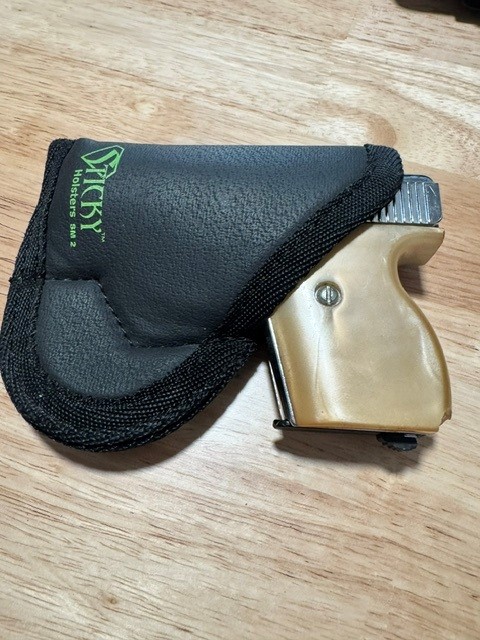
On a recent trip to my local gun store, I noticed something different sitting in the counter. On closer inspection, I saw a shiny, pearl-handled Lorcin .25 automatic that looked like it walked right out of the bad streets of Chicago. When I saw the price of $45 on it, i had no choice but to purchase it for my collection. I honestly didn’t expect to like the little thing so much, but after a few times it really grew on me, sparking me to dig deeper into the history and a time when handguns were mass-produced and offered at a price point that anyone could buy on a moment’s notice.
For decades, inexpensive handguns occupied a controversial but important part of the American firearms market. They have been called everything from “budget guns” and “pocket pistols” to the much more politically charged term “Saturday Night Special.” Raven Arms, Lorcin Engineering, Davis Industries, Jimenez Arms and, later, Cobra Enterprises were all associated with this segment.
These pistols certainly drew criticism. Fit and finish might be crude, the materials were selected primarily for cost and there were legitimate reputations for reliability or safety. But there’s another side to their history that is easy to forget: They put firearm ownership within reach of people who simply could not afford a $400, $600 or $1,000 handgun.
The Lorcin L-25 is a particularly interesting example.
The Lorcin L-25
Lorcin Engineering was founded in Southern California in the 1980s and was one of the better-known manufacturers in the inexpensive-handgun market. The company produced pistols in a range of calibers and the diminutive L-25 chambered in .25 ACP.
The L-25 was never to compete with a premium pistol. Its selling point was affordability.
A 1999 Washington Post article described the L-25 as retailing for around $69 in 1997, and Lorcin’s manufacturing method was heavily reliant on inexpensive zinc-alloy components. The price of modern guns has fallen considerably from traditional handgun prices in recent years.
That price mattered.
For a buyer with limited disposable income, the difference between a $70 handgun and one costing several hundred dollars could determine whether firearm ownership was financially feasible at all.
Lorcin wasn’t alone.
Raven Started a Movement
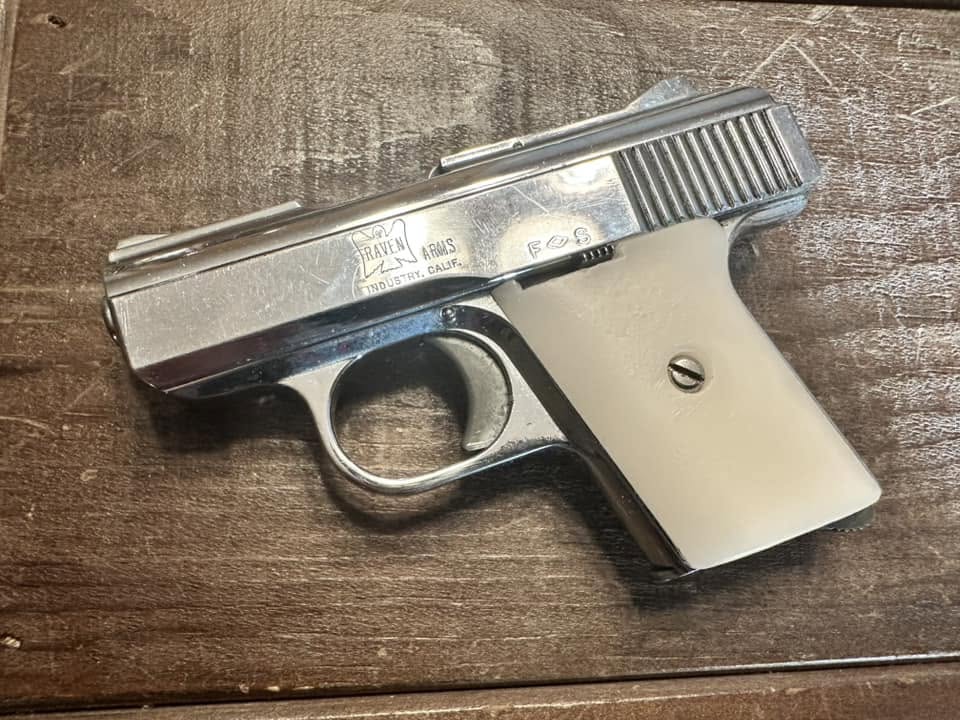
The family tree of inexpensive American pistols can largely be traced back to Raven Arms.
George Jennings established Raven in 1970 after the Gun Control Act of 1968 limited the importation of many inexpensive foreign handguns. Raven seized upon this market opportunity with an inexpensive domestically made .25 ACP pistol.
The Raven P-25 and MP-25 became enormously successful inexpensive pocket pistols.
Other manufacturers followed, many with personal or business connections to Raven. Recent reporting had documented relationships between Raven, Jennings/Bryco, Davis, Lorcin and other Southern California manufacturers. The group would eventually become known as the “Ring of Fire” companies.
The guns had one basic philosophy in common: keep the design simple, produce it in an economical manner, and make a handgun that could sell for much less than service pistols.
Davis Industries
In 1982 Davis Industries came to the market under Jim Davis, who had previously worked for Raven Arms and was George Jennings’ son-in-law. Like Raven, Davis’s focus was on inexpensive handguns and used zinc-alloy construction to keep manufacturing costs low.
Gun-store counters and pawn shops with guns of this type were priced at a price point that more established manufacturers often didn’t address.
The customer buying one didn’t necessarily have to compare a Davis with a premium handgun. In most cases, the question was whether the customer could afford a firearm at all.
That distinction is still relevant when discussing the budget-handgun market.
Jimenez and Cobra Carry the Idea Forward
The inexpensive-handgun category didn’t disappear when many of the original Southern California companies closed.
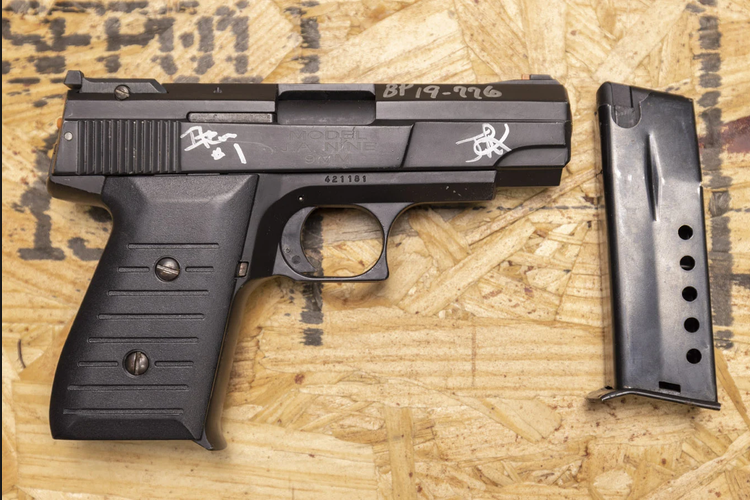
Jimenez Arms continued making firearms based on earlier designs while Cobra Enterprises of Utah acquired rights and tooling from Davis Industries and other manufacturers. Cobra produced its own line of inexpensive pocket pistols and derringers.
The names changed, but the market was there.
There have always been consumers who want—or can only afford—an inexpensive firearm.
And that raises a larger question.
Does inexpensive not mean unsafe or unreliable?
Today, the answer should be no.
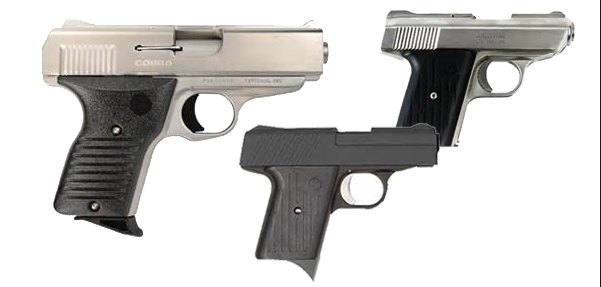
The Difference Between Cheap and Affordable
The reputation of older inexpensive pistols is not snobbery.
There were legitimate concerns about some models. For example, an ATF warning cited a drop-related safety concern involving the Lorcin L-22. That isn’t to say that every inexpensive handgun was bad, but it shows why manufacturers need to distinguish low manufacturing cost from cutting corners on safety.
As manufacturing has advanced so much that it is considerably more likely that companies will be able to make that distinction.
CNC machining, better casting and molding techniques, improved quality control equipment and new engineering equipment can help manufacturers control costs while staying on track. A firearm doesn’t need to have high-end engraving, expensive finishes or premium cosmetic features to do its basic job.
There is nothing inherently contradictory about an economical firearm that is subjected to serious safety and reliability testing.
Modern Safety Expectations Have Changed the Equation
Another big difference between the Lorcin L-25 era and today’s market is the regulatory environment in parts of the United States.
California is perhaps the easiest example. Handguns on the roster must be tested by a DOJ-certified laboratory before they are licensed for sale. California has firing requirements and a drop-safety test. The drop procedure is to drop from about one meter onto the concrete surface, and the same submitted handguns must be able to meet required firing and drop-safety.
And those requirements aren’t universal throughout the nation, so it’s inaccurate to say that every handgun sold in America must pass the same government drop test. The laws and testing requirements vary greatly from jurisdiction to jurisdiction.
However, today’s manufacturer entering the inexpensive-handgun segment faces safety expectations that are very different from those associated with the bargain-pistol market several decades ago.
And that’s good.
Personal Protection Shouldn’t Be a Luxury Product
This is where the history of the Lorcin, Raven and Davis pistols becomes particularly relevant.
There is a tendency in the firearms community to view handguns as enthusiast products. We discuss trigger quality, machining, optics compatibility, finishes and dozens of other features.
But it’s not the same thing for the customer who walks into a gun store with $250 available as an enthusiast.
He or she may simply want an affordable firearm for lawful personal or home protection.
A customer simply telling them to “just spend another $300” ignores economic reality. And for many American households, $300 is a lot of money. The better answer is for manufacturers to compete aggressively at the affordable end of the market without compromising fundamental safety and quality control.
A budget pistol does not need to be beautiful. It doesn’t need to have a match trigger or custom finish. It does need to meet safety standards, work consistently with the right ammunition, and be backed by a manufacturer that will stick by its product.
What the Lorcin L-25 Can Teach Today’s Industry
The Lorcin .25 Auto belongs to a very different time in American firearms manufacturing.
Lorcin, Raven, Davis, Jimenez, and Cobra all became part of the history of America’s inexpensive handgun market. Their products attracted buyers precisely because they filled a price category that larger manufacturers often neglected. But the history of this segment—including safety concerns surrounding some models—shows that affordability cannot substitute for sound engineering and quality control.
Today’s firearms industry has an opportunity to maintain the best of that idea while leaving the failures behind.
Affordable shouldn’t be just another word for disposable.
The technology of modern manufacturing and meaningful safety testing makes it possible to approach the entry-level handgun differently: eliminate unnecessary expense rather than necessary safety.
The Lorcin L-25 will never be remembered as a finely crafted pistol. That’s really not what it was trying to be.
It was a lot simpler: the idea that there was a market for an American-made handgun at a price ordinary people could afford.
And decades later, that market still exists. For today’s manufacturers, it is the challenge that they have now to serve it better.
