






by Bob Campbell
Training is training, and fighting is fighting. You have a lot of ground to cover in achieving proficiency. It is often said that without training, even the best firearms aren’t very useful. This is true. By the same token, some pistols will limit the user in the implementation of skill.
For those wishing to exploit every advantage, carry optics are available. These modern tools will provide a shooter who trains and understands the system an edge. Anyone who thinks the criminal class isn’t dangerous or capable of inflicting death and injury on even the trained and well-armed is living in a different reality. Don’t underestimate any of them.
A before-the-fact “momma’s boy” gave the author a scar on his face that is far from a beauty mark but perhaps gives him character. So they say, charitably. The only bullet wound—and it was as minor as it gets—was inflicted by a burned-out doper with a zinc-frame revolver. He nearly shot himself on the draw. He fired just outside his pocket. The bullet struck the pavement and bounced into my leg. He was responsible for the overdose death of his brother a few weeks earlier.
And no, I didn’t shoot him. The proximity was such that a right hook and wrist lock did the trick.
A recent study showed that most criminals arm themselves with polymer-frame, striker-fired 9mm handguns. Some use AR-15s. Interestingly, many of the AR-15s did not have sights. Spray and pray is alive.
So you may rest on little or no training and a pocket .38 or .380 and hope for the best. Perhaps Saint Simeon will hear your prayers.
There is a flip side to the coin. I recently watched a video in which a felon came out of a felony car stop shooting. An LAPD officer took him down with one shot at 32 to 37 yards. That is exceptional. However, a center-mass hit at 35 yards is well within the skill set of a trained shooter with a striker-fired, polymer-frame FN, Glock, Springfield, S&W, or Shadow Systems handgun.
Don’t forget to breathe deeply and keep your nerves quiet. Consider your threat profile. Takeover gangs are common. Watch the news for the latest events. You won’t have to look very hard to find violent criminal action.
Still the Same
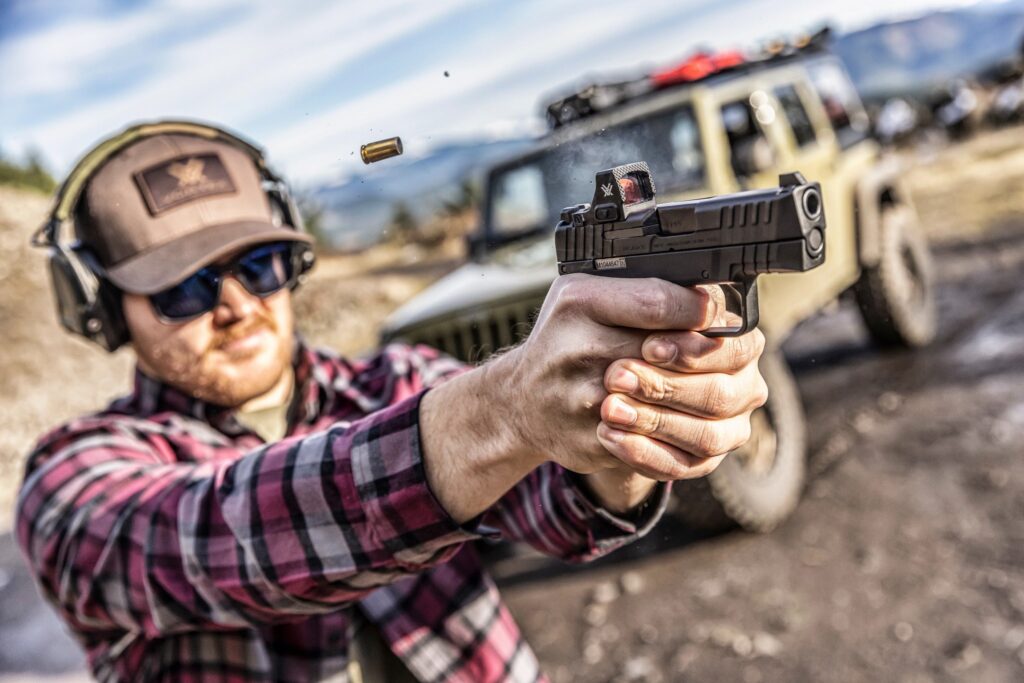
With red-dot sight training, the things that are still the same are safety and preparedness. Don’t show up at class without knowing how to load, unload, field-strip, and fire the pistol properly. Have a good understanding of safety. Keep your finger off the trigger during presentation and reholstering. Keep an open mind and a willingness to learn.
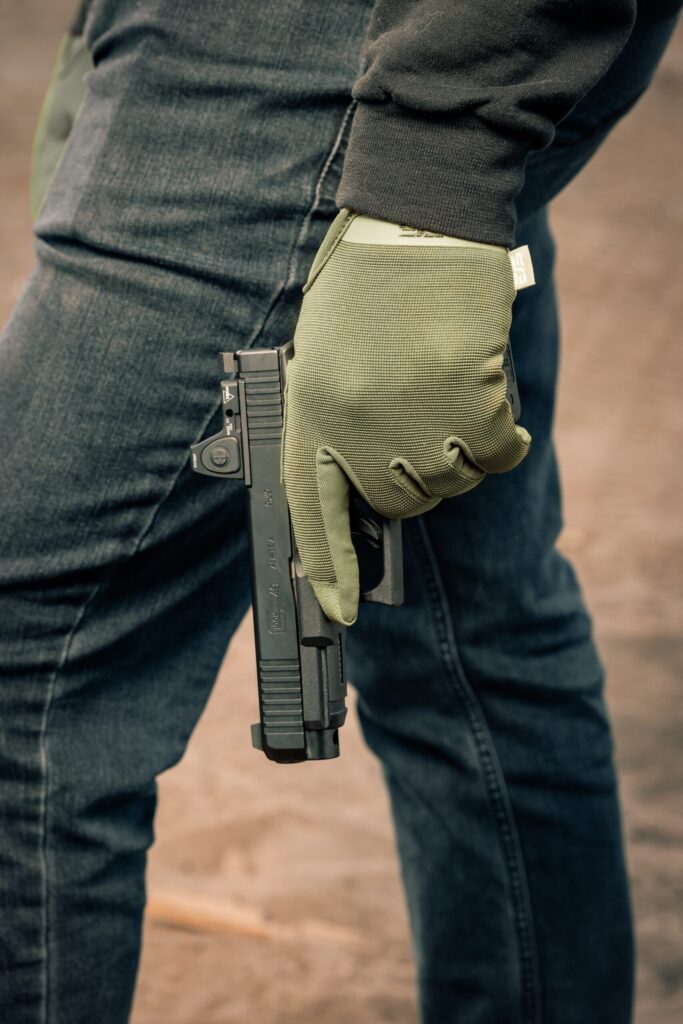
Safety comes first. Concentration and coordination are needed. That is the baseline for any firearms training.
A caution. I will be frank. If you are shooting well with iron sights—and the only way to learn if you are shooting well is to train against others, take a class, or engage in competition—perhaps you don’t need a carry optic.
I say this because the learning curve for a carry optic demands a minimum of a few weeks of practice and a few thousand dry-fire repetitions, along with at least five hundred cartridges fired in training. When you are done, you will be faster, more accurate, and have better situational awareness at all times because you will fire with both eyes open.
In my experience, the change wasn’t gradual, although it took some time. I simply got it and have had the hang of it since. With practice, you will get faster and more accurate.
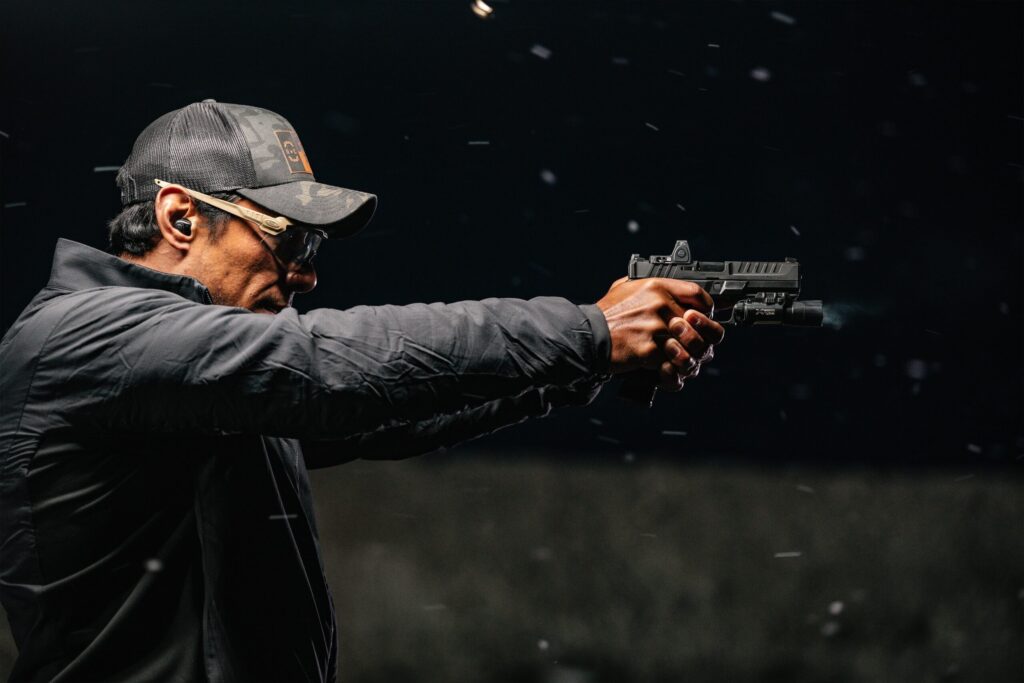
I am much faster with the carry optic. After all, competition shooters who win the game use optics. Don’t scoff at the parallel. Shooting is shooting, and while the demands of competition on both the shooter and the gear are different, shooting is still shooting.
I have re-examined the passing times I once allowed myself on routines I follow at the range. With the carry optic, there is no point in being satisfied with previous performance.
During my adoption of carry optics, I felt that I wasn’t making headway. I kept careful notes, and it turned out I was getting better. It takes time, and that time is well spent in drills done correctly.
It is possible to train to a high standard solo, but get the right procedure down first.
The Theory of Red-Dot Sights
With iron sights, the front sight is placed into the rear sight notch. The eye focuses on the front sight, keeping it sharp. The target should be blurred.
While this works in classic target shooting, it is difficult to approach in combat shooting. There are tactics for short-range shooting, such as meat-and-paper shooting and using only the front sight. Most of these were developed because factory sights were inadequate for the task at hand.
(The gunfighters of the past used their sights. Colt factory records show that Bat Masterson ordered a special tall front sight on his Colt SAA. Tom Threepersons’ SAA is in a museum. It features a special tall, squared-off front sight.)
With the red-dot sight, both eyes are open. This provides excellent awareness of your surroundings. Problems such as cross-eye dominance and presbyopia are canceled out by carry optics. A short-slide, short-sight-radius handgun is no longer a drawback.

Focus is no longer on the front sight. You focus on the target. The target is clear, and the red dot is superimposed on the threat. Simple as that.
The dot may be larger for rapid engagement at close range. Other designs feature a 3-MOA dot that doesn’t subtend small targets at long range.
The greatest hindrance to speed and a perfect sight picture is simply finding the dot. Some struggle with this, and it kills speed and is the single greatest discouragement in red-dot shooting.
People have shorter or longer limbs and different shooting styles. All of us must keep a secure grip and present the red dot to the eye properly.
I have adopted several techniques that have aided learning the red dot and acquiring the reticle at speed. I haven’t invented anything, only adopted existing drills.
Dry fire is essential. I would coach anyone to perform at least five hundred successful dry-fire presentations with a triple-checked unloaded firearm before beginning live fire. This is essential groundwork.
I have used two viable techniques. Eventually, you will simply bring the dot up, and it will appear in front of your eyes.
One drill is to quickly bring the gun up and place the nose on the rear of the slide. The red dot sits higher than a fixed rear sight. The nose-on-slide-cover reference is ideal for most applications. Bring the handgun up with the nose in line with the slide cover, and the eyes should be on the dot.
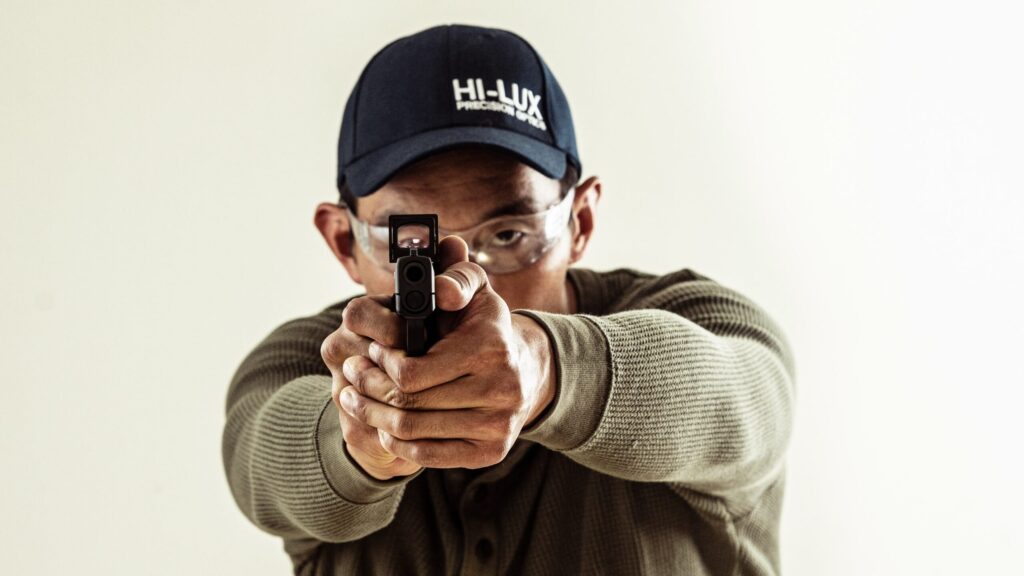
An alternative is to bring the handgun up slightly muzzle-high. Then turn the muzzle down and you will see the dot. Either works well. Try each to evaluate your speed.
Once you have proper presentation to the target mastered, neither is necessary. After a time, you will simply get the dot into your line of sight.
Focus on the target, and as the red dot comes into your field of vision, the carry optic breaks the plane between your eyes and the target.
Don’t use any other framework to get on target. Don’t look at the top of the carry optic, and don’t use your backup sights to get on target. Train until you naturally pick up the red-dot reticle.
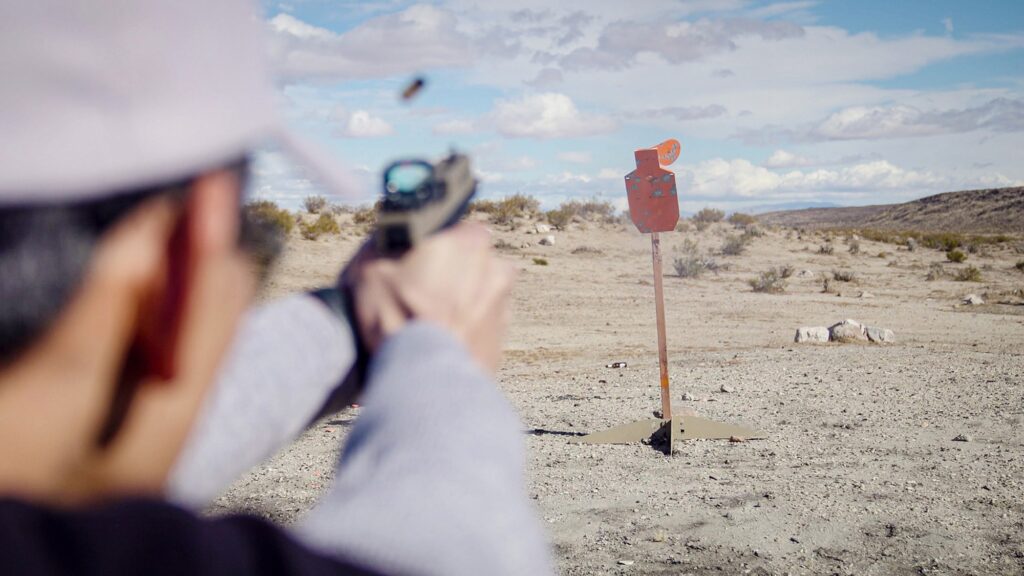
Keep the wrists locked and your thumbs forward. Press the trigger to the rear in a smooth motion. As you control recoil, keep your eyes on the threat and move the red dot to the target. Don’t follow the dot during recoil. That will slow you down.
Train your firing grip to keep the pistol on target and returning to target.
Once dry fire has been successfully implemented and the results validated at the range, I engage in drills as usual. The standard response drill is to draw, fire, and get a center hit at ten yards in 1.5 seconds. You will shave some time off with a carry optic.
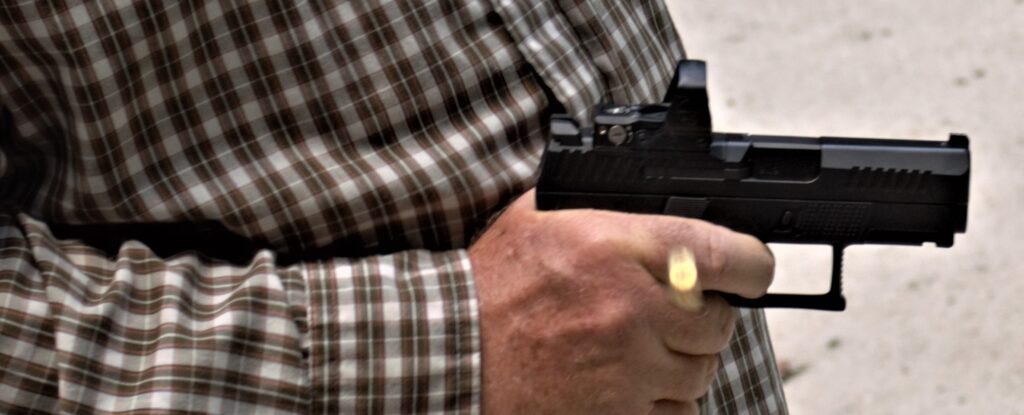
Next, I draw and fire, double-tap or hammer the control, execute controlled pairs, and perform failure-to-stop drills.
Multiple-target drills really show the advantage of a carry optic. It is business as usual in personal training, save that I am faster and more accurate.
An increased field of vision results in faster response to multiple-target drills. Firing from behind cover is addressed. The red-dot sight is especially effective in situations where you are in shadows and fixed sights would not be seen well.
Your times and accuracy will improve with practice for most shooters. Those shooters with less visual acuity will flourish with red-dot sights.
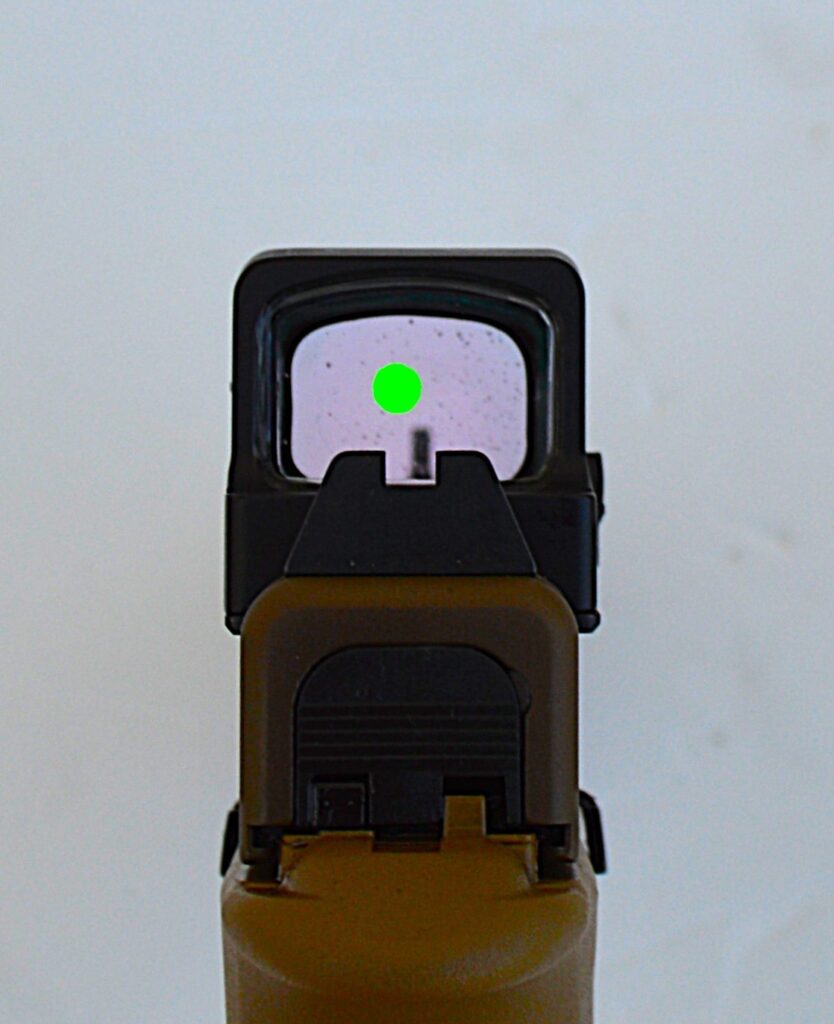
Carry optics are proven reliable, effective, and responsive to a trained shooter. Consider your options, and a carry optic may be the best choice for your needs.
If you want to learn more about red-dot sights, training, and carry optics, the author’s book, Red Dot Sights for Modern Handguns from Gun Digest, is a good resource.
