






I’ve learned a lot about cigars, tobacco, and variations in tobacco origins over the last 10 years, while enjoying a smoke with my longtime friend and gun writer, Boge Quinn from gunblast.com. He may not have realized how much I listened, but through his knowledge and experience, I was able to research enough to write this piece and help introduce others to the world of Cigars. This article is dedicated to him.

Cigars have been more than a way to smoke tobacco for centuries; they are a study in craftsmanship, agriculture, tradition and patience — from tobacco fields where individual leaves are cultivated to the torcedor’s skillful hands that roll them into cigars, every cigar has a story of its origin and construction. When you first start out, there are just so many choices. How is one cigar different from another? Why are some cigars nearly black while others are pale golden brown? Does a longer cigar make for a stronger cigar? And most importantly, how do you store your cigars once you get them home?
Cigars are not something that you learn overnight. It’s a journey of discovery. The best place to start is with the basics. Tobacco: Where the journey begins. The character of a cigar starts with tobacco. Like wine grapes (where they are grown), cigar tobacco can take on different flavors and aromas depending on variety, soil, climate, and curing process. Some of the world’s most respected cigar tobacco comes from Cuba, Nicaragua, the Dominican Republic, Honduras, Ecuador, Mexico, and the United States.

Cuban Tobacco
Cuban tobacco is legendary among cigar smokers. The Vuelta Abajo region in Pinar del Río is particularly famous for producing premium cigar tobacco. Cuban tobacco is known for its rich, earthy and complex flavors. But because of trade restrictions and regulations about Cuban cigars in different countries availability can vary greatly depending on where you live.
Nicaraguan Tobacco
Nicaragua has become one of the most important cigar producing countries in the world. Tobacco grown in Estelí, Jalapa and Condega can produce radically different characteristics. Nicaraguan cigars are often thought of as bold, spicy and earthy but the country makes everything from powerful full-bodied cigars to remarkably smooth and nuanced blends.
Dominican Tobacco
The Dominican Republic is another major center of premium cigar production. Dominican tobacco tends to produce smoother, aromatic and sometimes creamy characteristics. The country’s tobacco-growing regions have become particularly important for producing wrapper, binder and filler tobaccos for cigars enjoyed around the world.
Honduran tobacco
Honduras produces tobacco with a reputation for being rich, earthy and sometimes spicy. The Jamastrán Valley and area around Danlí are key to the country’s cigar industry. Ecuadorian Tobacco. Ecuador has become especially famous for wrapper tobacco. The cloudy climate and volcanic soils of the country can create conditions under which wrapper leaves can be grown with excellent color and texture. Ecuadorian-grown wrappers are used on cigars mild and creamy to rich and complex.
Mexican and American Tobacco
Mexico’s San Andrés Valley is known for its dark, flavorful tobacco (San Andrés Maduro wrappers). They are often described as rich, earthy, coffee-like, and sometimes sweet in flavor. The United States also has a long tobacco-growing tradition. Connecticut in particular is famous for Connecticut Shade and Connecticut Broadleaf tobacco. Connecticut Shade tends to produce lighter colored wrappers with smoother, milder profiles, whereas Broadleaf can produce darker richer leaves.
The Three Main Parts of a Cigar
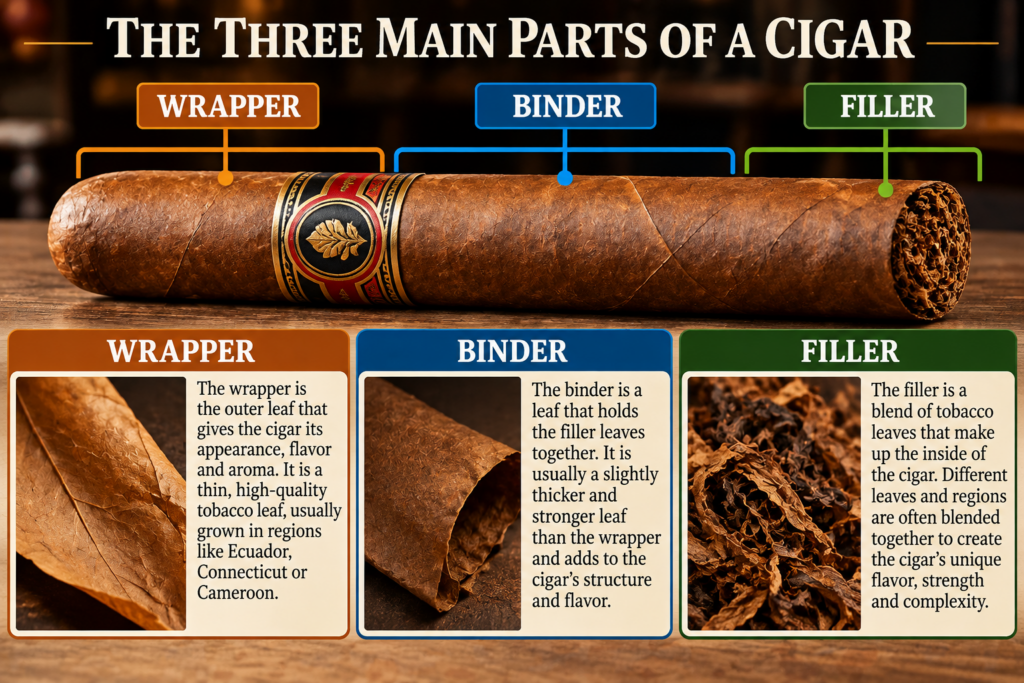
Before you choose a cigar, you should know what it is made of. A traditional premium cigar has three main components: Filler – The tobacco leaves inside the cigar which give much of its character and combustion. Binder – A strong tobacco leaf that holds the filler together. Wrapper – The outer leaf.
Although it is only a portion of the cigar, the wrapper can influence its aroma, flavor, and appearance greatly. The combination of these three elements is what gives a cigar its personality.
Does Cigar Length Affect Flavor?
Cigars come in an enormous number of sizes. You’ll find names like Robusto, Toro Churchill Corona Gordo etc. Two measurements are important: length and ring gauge. Length is measured in inches; ring gauge describes the diameter of the cigar (50 ring gauge = 50/64″). But does bigger mean better? Not necessarily. A longer cigar generally means a longer smoking time. Because more tobacco is used (more flavor stages), it can also allow a blend to progress through different flavor stages as you smoke it.
Diameter can also affect smoking experience. A larger ring gauge has more filler tobacco than wrapper (so it could put more emphasis on the flavors of the filler blend). A smaller cigar, meanwhile, can offer a shorter more concentrated experience. If you are new to cigars a Robusto is often the perfect cigar to start with. It’s not too big that you need two hours to smoke it and not so small that you never get around to smoking it.
Why Are Some Cigars Dark and Others Light?
One of the first things a new cigar enthusiast notices is how much wrapper color there is. Cigars can be pale yellow and tan to reddish-brown, chocolate brown, and nearly black. The color of a cigar doesn’t tell you how strong it will be. This is an important distinction. A dark cigar isn’t necessarily a strong cigar; a light cigar isn’t necessarily mild. Wrapper color is affected by the tobacco variety grown, growing conditions, fermentation, aging and processing. You will frequently hear terms such as: Claro – Generally a light-colored wrapper. Colorado – Usually medium reddish brown. Colorado Maduro – A darker reddish-brown wrapper. Maduro – a dark wrapper made through specific curing and fermentation processes. Oscuro – An especially dark wrapper. The same cigar can be made with different wrapper varieties (or vice versa) so that the appearance of the cigar changes dramatically and possibly its flavor profile as well.
Flavor
Don’t Expect Your First Cigar to Taste Like a Cigar
One of the most fun things about cigar culture is learning what flavors are out there. An experienced smoker might describe a cigar as having notes of cedar, leather, coffee, cocoa, pepper, earth, nuts, cream, spice or dried fruit. Don’t worry if you don’t taste all of those things. Flavor perception is highly subjective. The key is to build your own vocabulary. Don’t try to figure out what someone else says they’re tasting — ask yourself simple questions: What are you eating? Is it sweet or savory? Is it creamy or dry? Is there pepper or spice? Does it make you think of coffee, wood nuts or chocolate? Does the flavor change as the cigar progresses? Over time, your palate will become more sensitive.
Choosing Your First Cigars
New cigar smokers make the mistake of buying the biggest, darkest and most expensive cigar they can find. That’s usually unnecessary. Instead, experiment. Try a mild Connecticut-wrapped cigar. Then try a medium-bodied Ecuadorian or Nicaraguan wrapped cigar. Finally, try something with a Maduro wrapper. Keep notes about what you enjoy. Write down the brand, size and wrapper of the cigar; country of origin; impressions. Eventually you may find that you like a certain combination of wrapper, filler and country. There is no right or wrong answer. The best cigar is ultimately the one you enjoy.
Buy Your First Humidor
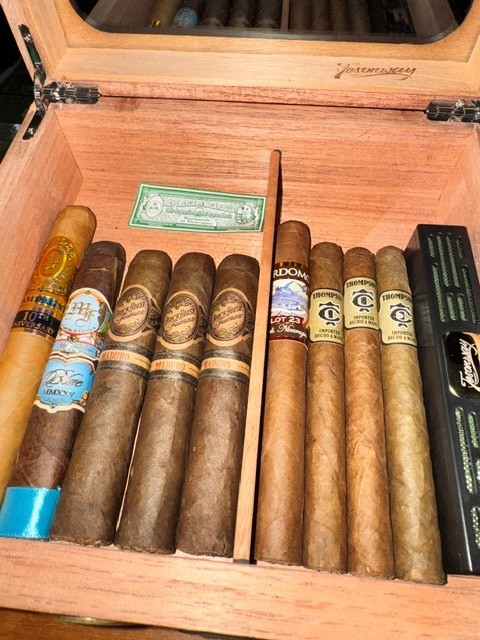
Once you start buying premium cigars you need to store them properly. A cigar is a living agricultural product. If not stored properly it can dry out, lose its character and burn poorly. Too much moisture can cause problems of its own. A humidor is used to maintain a controlled environment for storing cigars. If you’re just starting out, you don’t need a huge cabinet humidor holding hundreds of cigars. A small, quality humidor (25–50 cigars capacity) is a good starting point.
What Should You Look For?
Look for a humidor with:
• A seal that will stay closed.
• Good quality construction.
• Properly fitted lid.
• Dependable hygrometer.
• Humidification system suitable for your collection.
• Enough capacity so that your collection can grow.
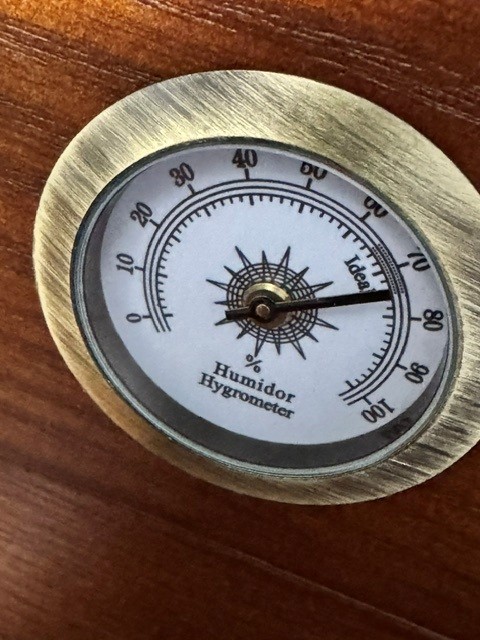
Don’t buy an inexpensive decorative box because it looks like a humidor. Stability is much more important than appearance. Don’t Forget Humidor Preparation. A new wooden humidor shouldn’t be filled with cigars as soon as you take it out of the box. Traditional wooden humidors need to be prepared before use. The interior needs to get into the proper moisture balance before you put in your valuable cigars. Follow the instructions from the manufacturer and give the humidor time to settle down. A digital hygrometer is also worth the investment because it gives you a more reliable way to monitor humidity than many inexpensive analog gauges.
How Many Cigars Should You Keep? It’s easy to fill your new humidor right away. It’s tempting!
It’s tempting to fill the new humidor right away. After all, it’s brand new! So you do just that. You load it up with a bunch of nice-smelling cigars. You put some in and then some more. And then some more. And then some more. The box is already full so why not? Resist that temptation. Start small and learn what you like. A collection of 10–20 different cigars can be a great education! Buy different sizes, wrappers and origins.
For example, you might purchase: • A Connecticut-wrapped cigar. • Maduro. • Nicaraguan puro. • Dominican blend. • Ecuadorian wrapped cigar. • Smaller Robusto. • Larger Toro. • Medium bodied cigar. • Fuller bodied cigar. This gives you the opportunity to compare them not just pile cigars up.
The Importance of Patience
Perhaps the most important lesson for a new cigar lover is patience. Don’t rush through a cigar. Cut it evenly, toast the foot evenly and let the cigar burn in. Don’t puff aggressively – take slow deliberate puffs rather than smoking fast. A cigar is meant to be enjoyed slowly. Let the smoke linger on your palate. Notice how flavors change from first third to middle and finally toward finish. Maybe a cigar you didn’t like at the beginning turns out to be fascinating once you learn how to smoke it properly.
Building Your Own Cigar Experience
Becoming a cigar aficionado isn’t about owning the most expensive cigars or knowing the longest list of cigar terms. It’s about learning to appreciate the craftsmanship. Learn where tobacco is grown. Learn how leaves are cured and fermented. Try different wrappers and blends. Try different sizes. Store your cigars properly. Most importantly, develop your own preferences. The cigar world is very diverse. One smoker may enjoy a light Connecticut wrapped with coffee and another a strong Nicaraguan Maduro after dinner. Neither is wrong. That’s what makes cigars so interesting. Every cigar is a chance to slow down, enjoy the moment and learn something new. And for those willing to take that journey then the journey from curious beginner to knowledgeable cigar aficionado can be as rewarding as the cigar itself.
